



Everyone’s jealous of taste right now. It seems to be the one thing AI isn’t threatening to make part of the “permanent underclass,” and it’s annoyingly hard to define. But if anyone can give it some shape, it’s Esther Moisy-Kirschbaum.
I found Esther while looking for writers who think seriously about where culture is going. She writes and edits Magma, a paid business publication where she analyses emerging markets and early signals across industries in French.
Her personal newsletter on trends, Oblique Forecasting, is sharp, informed by her background living in Istanbul, London, Berlin, Vilnius, Dubai, and now Paris…you will read it and walk away with at least one new opinion. Which is, it turns out, what taste requires.

Taste can't be faked, and tech knows it. The new tech ruling class is looking for a shortcut to cool. But taste inherently takes time to develop and requires confidence and humility.
Taste is about standards, not aesthetics. You need to have built a voice or a set of references before you sit down with AI, otherwise, you don’t have the discernment to know when the answer is good enough.
Writing’s edge is precision and portability. You can skim it, go deep, copy a paragraph into your Notion, forward it to a colleague with one section highlighted. A podcast gives you a vibe, but a newsletter gives you a plan and the data to make it happen.
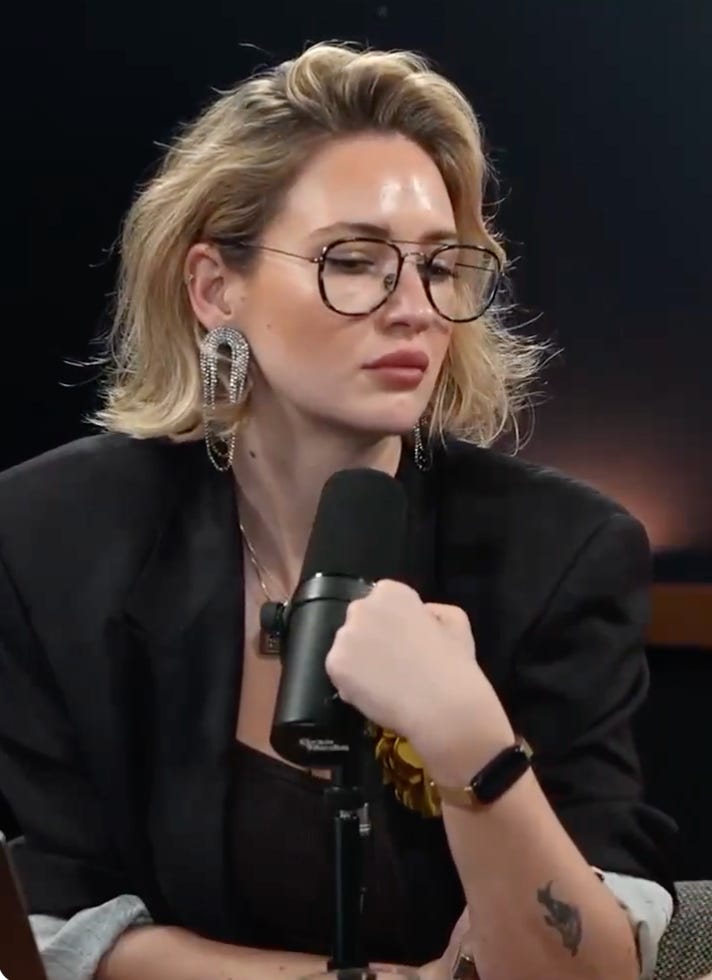

You wear many hats—you run Magma, your own Substack. Tell me about how you spend your time.
My official title is Head of Content for Magma, a paid business publication — I'd compare it more to an online magazine than a newsletter. The readership is mostly entrepreneurs, individual investors, and VC funds.
Every issue we explore three emerging verticals and give specific business opportunities linked to each one. We're not just saying "this field is interesting" — we're saying there's a white space here, and here's how to act on it. I'm the only full-time person, and I commission experts in their own fields rather than journalists. Each brings real depth, but I'm the generalist who holds it together.
What is key to getting those insights before anyone else?
A lot of it is me being attuned to everything — subscribing to a million newsletters and podcasts — but also having real conversations with people who are deeper in their lanes than I am. I still need to be knowledgeable enough to understand them when they pitch me an idea so I know a little bit about a lot of things.
That’s why the network of experts matters, like my food and beverage person, for example. I’m not immersed in that world 24/7, whereas she has a small consulting business and gives me emerging trends as she sees them in hospitality.
Orso Media, which owns Magma, is famous for its podcasts in France, but Magma is the only text-based product in its lineup. In the age of five-hour podcasts, what do you think writing’s edge is?
With podcasts — whether audio or video — you’re confronting different points of view in conversation. It’s almost like a journey you take together. But unless you’re taking notes as you listen, what you come away with is more of a general vibe than an action plan.
The advantage of the written word is that you can copy-paste something into your notes or your Notion, or you can forward an email to your business partner with one paragraph highlighted. If I were to give you a market size figure in a video — say, this market is $3 billion in 2026 but is estimated to reach $15 billion by 2030 — most people can’t hold that in their head. When you read it, however, your brain sees the multiple.
And then there’s skimmability — you can read something quickly, pick out what’s relevant, or follow the links and go deeper. You can’t zoom in and out in the same way with a long-form podcast.
Everyone’s talking about taste right now, especially in relation to AI. Having taste is an important part of your job — it’s necessary to identify upcoming opportunities. How do you cultivate taste?
You usually only say someone has good taste when they have similar taste to you. You’re never going to walk up to someone who only dresses in Versace when you only dress in Issey Miyake and say, “You have great taste.” So taste is almost a bit of a fake concept — you’re looking for someone who’s similar enough to you, but who you’ve elected as having elevated that shared world to the maximum. That person is deemed someone with good taste.
In my opinion, this obsession with taste, driven by the tech world, is symptomatic of a power reversal. 20 years ago, culture — fashion, music, movies — was king, and tech people were seen as uncool nerds. Whereas today, they’re the ruling class in many ways. And they’re trying to find a shortcut to cool, just like AI can be a shortcut to many things. But taste inherently takes time to develop; you can’t fake it, otherwise it stays a surface-level aesthetic.
Taste takes both confidence, to stand for things even when they’re not the consensus, but also humility and curiosity, to be open to new things and sometimes change your mind.
“They’re trying to find a shortcut to cool, just like AI can be a shortcut to many things. But taste inherently takes time to develop; you can’t fake it, otherwise it stays a surface-level aesthetic.”
You've just described taste as almost impossible to define — and yet you're asking people to trust your eye when they follow your newsletters. How do you make that case?
I’m often described as a chameleon — that’s good and bad. It’s good in the sense that I can be in a lot of different rooms. But I’m not fully part of any of them. I’m too classic for my fashion friends, too fashion-y for the business people, and too balanced — I still enjoy a martini — for my longevity circles.
People turn to me because I can bridge the gap between industries, geographies, and generations. But that’s also what makes me hard to market, because it’s hard to put me in a box. It’s harder to sell myself with a quick elevator pitch.
Can you give me an example of that bridging — where the cross-generational, cross-industry view changed your opinion about a trend?
We can all agree that dating apps, as they currently exist, are failing us. But a lot of people commenting on these apps — whether they’re proposing new app concepts or completely new approaches — don’t really go back to the root of the problem.
Millennials are the last generation to have dated without dating apps. We started our adult lives without them, and they progressively took over. Whereas Gen Z came of age when Tinder and Bumble were already there.
Today, a lot of new apps try to recreate that first social contact: the feeling of meeting someone in real life. But for the new generation, that’s not a lived experience they’re missing. I see a lot of millennial founders trying to solve a dating problem through their own generational framework, and that’s not actually how social life works for younger people. There needs to be one generation that adapts massively to a new concept before it trickles down. And I don’t think that’s being taken into account enough in category and startup creation.
What about AI? Do you use it in your work?
I do. And when I interviewed for my current job, they asked if I used AI. When I said yes, it was clearly a plus. If you’re going to be speaking to people at the cutting edge of their fields, you also have to be curious enough to explore new tools yourself.
A big part of my job is pattern recognition and bridging different things. Sometimes I’ll be stumped — I’ll have notes, links to different things, names of a few companies — and I can sense there’s a connection, but I can’t quite see it. AI helps me structure it. My analogy is that it’s like dumping the contents of a bag onto someone’s desk and saying: What does this add up to? But I’m not accepting the first answer I get. It’s always a conversation. I’m challenging it, pushing back, saying we’re close but not there yet.
And that goes back to taste. If you’re going to be writing, generating images, whatever, you do need that elusive sense of taste. You need to have already crafted a voice or an eye or a set of references before you sit down with AI. Otherwise, you don’t have the discernment to know when the answer is good enough.
“You need to have already crafted a voice or an eye or a set of references before you sit down with AI. Otherwise, you don’t have the discernment to know when the answer is good enough.”
Even if you have that discernment, it feels like it’s getting harder and harder to stand out as a writer or a thought leader.
Exactly. And it goes back to what I was saying — every good thing is also a hard thing. If you want to establish yourself as a leading voice, you also have to do the promotion work that a PR team might have handled for you before. The good news is you can do it. The hard news is that you have to.
You look at trends across geographies. Is there anywhere Europe is actually setting the agenda rather than following the US?
Right now, contrast therapy — sauna and ice bath — is the hottest thing in Paris. Two new places have just opened, both essentially replicas of Othership, which started in Canada and then New York.
But here’s the thing: being late to business trends almost gives France an edge. We can see what worked elsewhere and what didn’t — and then adapt it, because the cultural differences are real. In the US, effort and the process of longevity is the status symbol. People walk around in their Lululemons in LA, they talk openly about their routines. In France, you don’t show the sweat. The status symbol is the outcome — you looking toned, youthful, gorgeous. You can’t just import a concept wholesale.
Where Europe genuinely leads is luxury. France and Italy are still the best in the world at it — the care, the eye for beauty, the quality. When you lean into that, you create something with a real competitive advantage versus the US. That’s not going away.

If you want to go further and read Esther’s writing, here are a few of my favorite posts of hers:
Esther’s fitness and health journey — a masterclass in business writing meets personal essay.
An investing experiment that cleverly reveals why consumers can’t get a financial slice of the most habit-forming brands today.
If you haven’t subscribed, join me.
“The good news is you can do it. The hard news is that you have to.” hit hard!
Always so interesting, thank you so much for your work - gets me thinking (a lot).