


Welcome to Elea.notes, a newsletter about tech, writing and creativity. Sign up if you haven’t.
I’m interested in how technology is changing both writing and the traditional vehicles for writing—not least of all, the book.
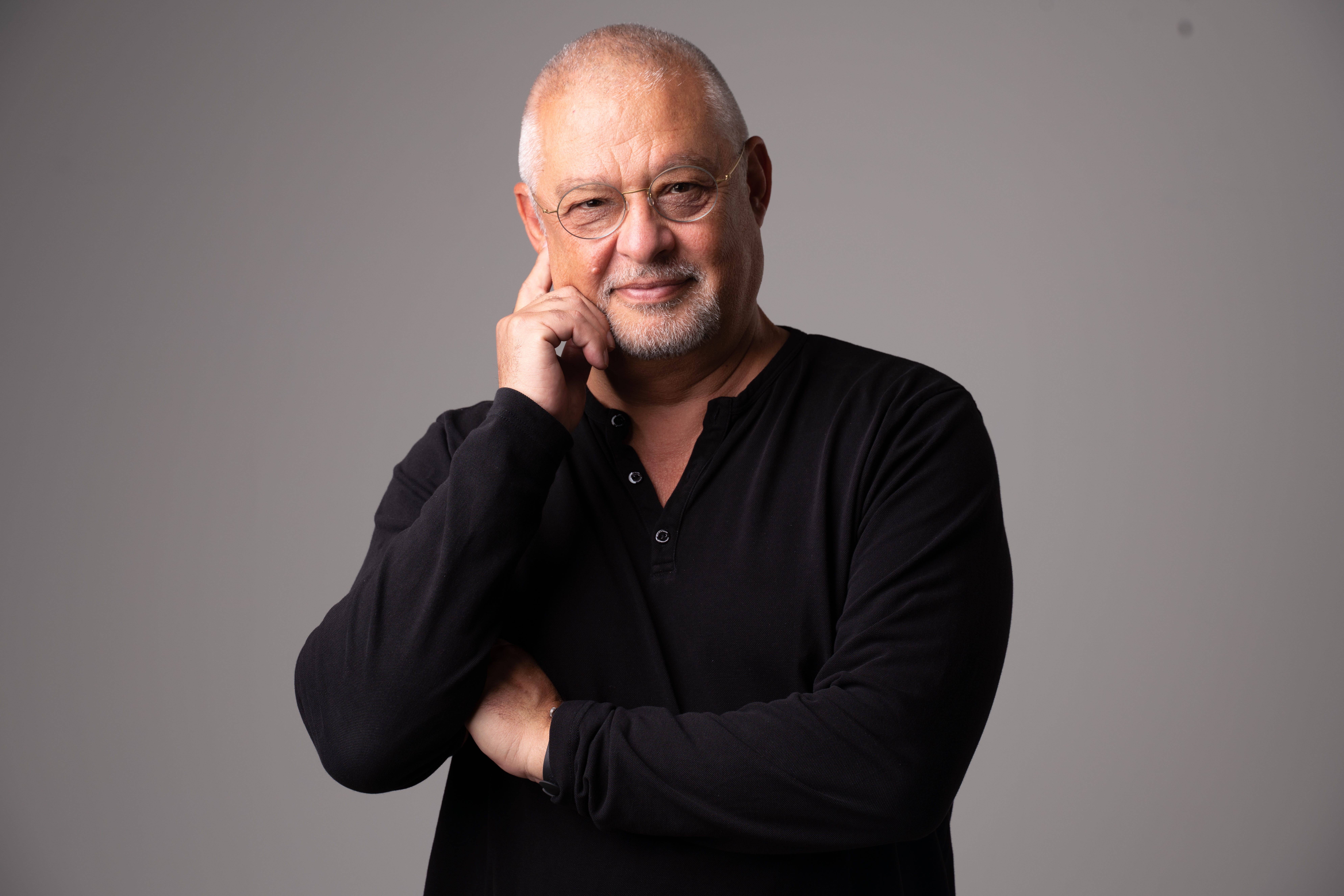
My curiosity led me to Irish-Egyptian entrepreneur and author Nadim Sadek. His background reads like a novel: raised across Ghana, Nigeria, Kenya, Malaysia, Indonesia and the Caribbean, he studied philosophy and psychology before building a market research company that sold to WPP. He then bought an island off the coast of Ireland, which became the base for a whiskey, food and music brand.
In the latest chapter of his life, he runs Shimmr AI, a company that drives book sales with automated, AI-powered advertising. The company says that only 5% of publishers’ catalogs are visibly marketed. With AI, even deep backlist titles—say, a niche book on salmon fishing in Sweden (more on this later)—can be matched to their ideal readers. Over the past year, Shimmr delivered roughly 120,000 ads.
Key takeaways from our conversation:
With AI, creative ideas can be expressed across infinite forms: books, songs, videos, sculptures. Publishers become property shepherds, not gatekeepers. Creators will concentrate on what you’re expressing rather than how it’s expressed.
Our feelings—not our reasoning—are our greatest strength in an AI world.
Our conversation, condensed for clarity and brevity below.
Tell me about Shimmr.
Advertising is essentially three things: identifying the best selling strategy, creating creative assets, and deploying them to audiences. We wondered whether AI could do all three things, and it turns out our technology does it incredibly well.
The core of what we do is something we call “ProductDNA”—the absolute core, the unique fingerprint of a product. Not just functionally, but psychologically.
What’s an example and what do you mean psychologically?
If you’re trying to sell a book about salmon fishing in Sweden, you might think it’s about fishing, about Sweden, about nature. But when you dig into the psychological themes, you discover it’s actually about melancholy, depression, and cruelty.
The creative assets we generate are very emotive because they’re so true to the book and psychologically based. Our media deployments are very efficient—we only show ads to people predisposed to themes of melancholy, depression, and cruelty. They see it and think, “Oh my God, this is just the book for me.”
And this helps sell more books?
We’re seeing metrics that are 12 times better at driving to e-commerce than traditional advertising benchmarks. Over the last two years, we’ve evolved from just doing images with captions to now generating our own music and videos [for ads].
Why did you start with publishing?
Publishing checks all the boxes we need, and any industry that’s right for us needs to meet four criteria:
First, a very large catalog of SKUs [stock keeping units]—these products can never generate enough cash individually to justify a traditional advertising campaign. Second, these SKUs have discoverability challenges. Third, the products need psychological or narrative depth. Fourth, you need a preponderance of e-commerce so you can drive transactions and get a feedback loop.
Where does social media fit into the future of advertising? I know that’s where Shimmr is currently connecting readers to books.
I’m not sure I have the crystal ball, but what I’m increasingly certain about is that we’re moving into a world of multimodal interactivity. We need to stop thinking about traditional channels and start thinking about audiences being matched with content wherever it’s most suitable.
Everything is a property—whether it’s a Disney character, the New York Times, or you, Eleanor. We’re all properties that need to be developed and husbanded and sometimes monetized. We deal with properties across multiple touchpoints constantly.
What does that look like practically?
Think about our relationship. We’re talking on Zoom right now, but we could just as easily be on WhatsApp video. We’ll probably email. We might meet at some stage. You’ll write about me somewhere, I’ll read it, I’ll share it on LinkedIn. The property of “Nadim Sadek being interviewed by Eleanor Warnock” becomes a multimodal interactive thing.
I love that you use the word “properties” instead of “brands.” There’s something physical about it, like journeying through different places and expressions.
I’m migrating that way myself. I was at a lawyers’ conference in Manhattan recently, and I was really struck by the LA entertainment lawyers. They didn’t talk about anything other than properties.
If you brought them a book, or a film, or a photograph, they thought: What’s the prequel? What’s the sequel? How big is this property? How can we stretch it? What’s the franchise?
That’s such a different mindset from what many artists, who identify themselves so closely with one medium, think. It’s different from how publishers are organized as well.
It is. And I think it’s the mindset publishers need to adopt. Publishers become the gatherers and discoverers of all the beautiful new thinking that’s going to be at the core of whatever properties we enjoy multimodally. It doesn’t matter if it becomes a movie or a song or a magazine or a sculpture.
Taylor Swift is the perfect example of this. The live concert, the merch, the gossip, the music itself; she’s completely multimodal. But what happens to physical stores, for example?
AI can make bookshops smarter. It ensures correct stock because it knows a certain customer is coming. It can create virtual shelves, digital recommendations when you enter, based not just on your past purchases but on your psychological predisposition.
Plus, bookshops have coffee shops, events, readings. They’re cultural hubs in communities. That function becomes more important, not less.
Do you think there’s still value in the handmade, the artisanal?
Absolutely. Look at vinyl. The younger generation is rediscovering it. It’s inefficient, it’s awkward, it requires equipment. But there’s romance and craft in it.
Everything that’s inefficient about human craft will have a premium put on it. What’s more romantic than a handwritten note? It shows time, care, personal investment. As these things become rarer, they become more valuable.
I want to dig more into the discovery point. With AI generating infinite content, how do we find what’s good?
Discovery is becoming a massive difficulty. The solution is communities of curators. I trust you as a tastemaker. I follow people whose judgment I respect. Creating and consuming become the same thing. The people who read me are the people I’m reading.
It’s circular, relationship-based discovery. It returns us to pre-mass-media models when communities shared recommendations, but with global scale and AI-enhanced precision.
So it’s more human in some ways, even though it’s AI-powered?
Yes. The technology enables the human connections. That’s the paradox.
What’s your most controversial opinion about AI?
I invite people to view AI as what I call “the Panthropic”—the beguiling, liberating, mesmerising repository and distillation of all human accomplishment, available at our fingertips. I sometimes ask: Is AI the most creative thing humans have ever done?
I’m trying to wrestle people away from getting stuck in the copyright debates, the concerns about the em-dashes and all that. That’s all part of what I call the terrible twos of AI criticism.

What has your experience with AI taught you about humans?
It’s reminded me that our feelings are our biggest strength and value. We need to re-legitimize navigating through feelings instead of trying to make everything analytical.
I had a meeting recently where I realized that the whole world economy—this subservience to exploitation that we all submit to—is unsustainable. It isn’t a future. AI is forcing us to confront what makes us uniquely valuable, and that’s not our ability to compute and analyze. It’s our ability to feel, to create, to connect emotionally.
“AI is forcing us to confront what makes us uniquely valuable, and that’s not our ability to compute and analyze. It’s our ability to feel, to create, to connect emotionally.”
That’s a big shift from how we’ve organized society.
It is. But I think that’s the conversation we need to be having. Not whether AI will take our jobs, but what kind of society we want to build when the analytical work is handled for us. Do we want to keep optimizing for efficiency and exploitation? Or do we want to orient ourselves around creativity, around the things that make us human?
What would you say to a creative right now—an illustrator, writer, musician—who’s really afraid of this world?
If you’ve dedicated yourself to learning how to express your creativity in one particular craft, you’re right to feel threatened. You’re right to feel insecure. But I don’t think AI will become the crafter. What AI is going to do is help you identify, develop, and shepherd a creative idea through to some sort of fruition and expression. The expressions are going to become much more free-flowing.
So the barrier to trying new forms of expression comes down?
Exactly. What I would say to those artists is: Feel liberated by the opportunity to have multimodal interactivity in the future. Concentrate on what you’re expressing rather than how it’s expressed. It’s going to be much more about the subject rather than the object. We’ll commune with creators in terms of what they are bringing to our attention, rather than the form that it comes in.
I have a daughter who’s a musician and she’s unbelievable with lyrics. She just tells stories the way I tell stories, but she uses a different craft. I’ve never shown her my attempts at song lyrics because I’ve always been so horrified by them.
But now I feel emboldened to try writing a song based on little daydreams or observations. They could be three verses, five verses. With AI, I can finally explore that.
📚 Future Book conference
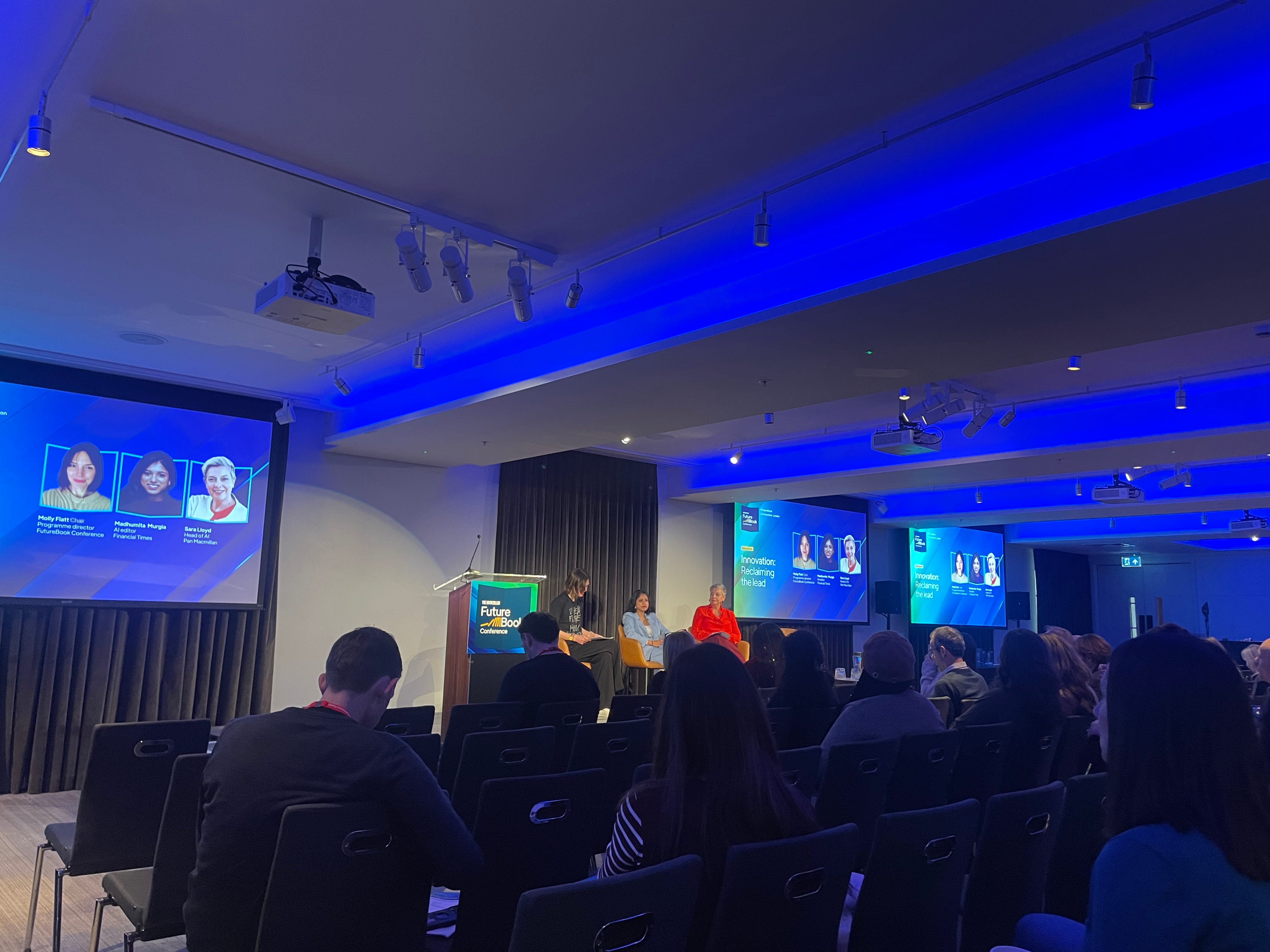
Instead of my usual reading links, I’m sharing some notes from The Bookseller’s FutureBook 2025 Conference this week. (Shimmr took home the startup of the year award at the event!)
Publishing giant Pan Macmillan has been running roundtables of authors, illustrators, agents and others to talk AI. Global AI Lead Sara Lloyd said AI (she called out Gemini specifically) has been used operationally, from digital marketing to team brainstorms. Read how Pan Mac is thinking about AI.
Hachette-owned commercial fiction publisher Bookouture has the final say on titles and covers and will change them post-publishing based on how the title performs…interesting! Managing director Jenny Geras said she would never publish AI-written books not for moral or ethical reasons but because she would “find it boring.” Preach.
Favorite fact of the conference I learned: Harper Collins has set up a train line in Italy to help reduce the carbon footprint of deliveries.
Thank you for reading and subscribing! What do you think the future of the book and/or publishing looks like? Let me know by replying to this email.
If you were forwarded this email and are not a subscriber, join me.
You're a brilliant researcher and interviewer, Eleanor, and it was genuinely a pleasure to spend time thinking about things with you. Thank you for this high-fidelity record of time together!