


Hello readers,
This is me opening my Oasis 2025 tour tote bag and setting a vexed feline upon you…yes, the proverbial cat’s out of the proverbial bag…
I’m founding a new publication.
Second Chapter will bring you long-form, front-line journalism about the issues, individuals, and institutions shaping our future through technology. All written by our team in Europe, which includes John Stanley Hunter (ex-BI, Finance Forward) as our editor-at-large and Amone Gbedemah (ex-Meta, Vodafone) as our chief operating officer. You can sign up here – our first content goes live in a few weeks.
Since this newsletter has always been about people who use writing to build things, I wanted to share why I think being a writer, and specifically a novelist, has prepared me well for founding a company.
Being a novelist is great training for founding a company.
I quit my last journalism job in 2024 to write a novel. I polished the manuscript at a Curtis Brown course earlier this year, and I’m optimistic I’ll find a home for it at a publisher by 2045 (lol). But it doesn’t really matter to me if it’s published the traditional way or not. More important is what the process taught me.
First, writing a novel teaches you to solve problems in extreme uncertainty and abstraction.
When you set pen to paper on a novel, you have the characters, the setting, and the broad strokes of the story in your mind. But you can only wrangle those elements onto the page, force them to be words that someone else can read and understand and be moved by, by hacking through a series of problems. In the course of searching for solutions, you take detours and discover other problems: why does this character do this thing? How can I make this scene connect to another?
Let me give an example. Towards the end of the book, one of the main characters meets his estranged mother. I knew that I wanted this character to leave the meeting never wanting to see her again. But what could happen in a one-hour interaction with someone you’ve been dreading/hoping to see for more than half your life that would make you take that decision? It took me a few days to figure out the answer — and it turned out to be very simple. Indeed, only a few words, which is sometimes all that such a monumental decision hinges upon. I won’t tell you what they are, but you can find out in 2045.
Entrepreneurship is also a series of problems. Particularly at the start of a company, these problems feel oddly like those I faced writing a novel. They are extremely abstract, in the sense that they do not have much scaffolding around them yet. You don’t have institutional baggage or dozens of employees or clients to provide fencing for your decisions.
No scaffolding doesn’t mean no rules, and in this respect, a novel is again similar. A novel, by virtue of being fiction, gives you flexibility and license with the setup; however, there are not infinite solutions to its problems.
You are usually writing in a specific genre — horror or romance? — and all genres have rules. As a founder, I choose my arena in the same way — SaaS or services? My decisions after that need to make sense within the confines of that genre.
Within any genre, you also must respect a set of moral rules and expectations about human behavior. You might write a story about someone backstabbing their friend. Their reaction needs to be proportionate to the gravity of the action, to their proximity to the betrayer, and their psychological state (is it right before their period? Are they used to being screwed over by other people?). If the answers that you present to those questions are not believable, you lose your reader. The same goes for a company: if my decisions don’t make sense to my readers, my investors, or my staff, I lose them, too.
Second, being a novelist requires you to know how to harness your creativity. So does being an entrepreneur.
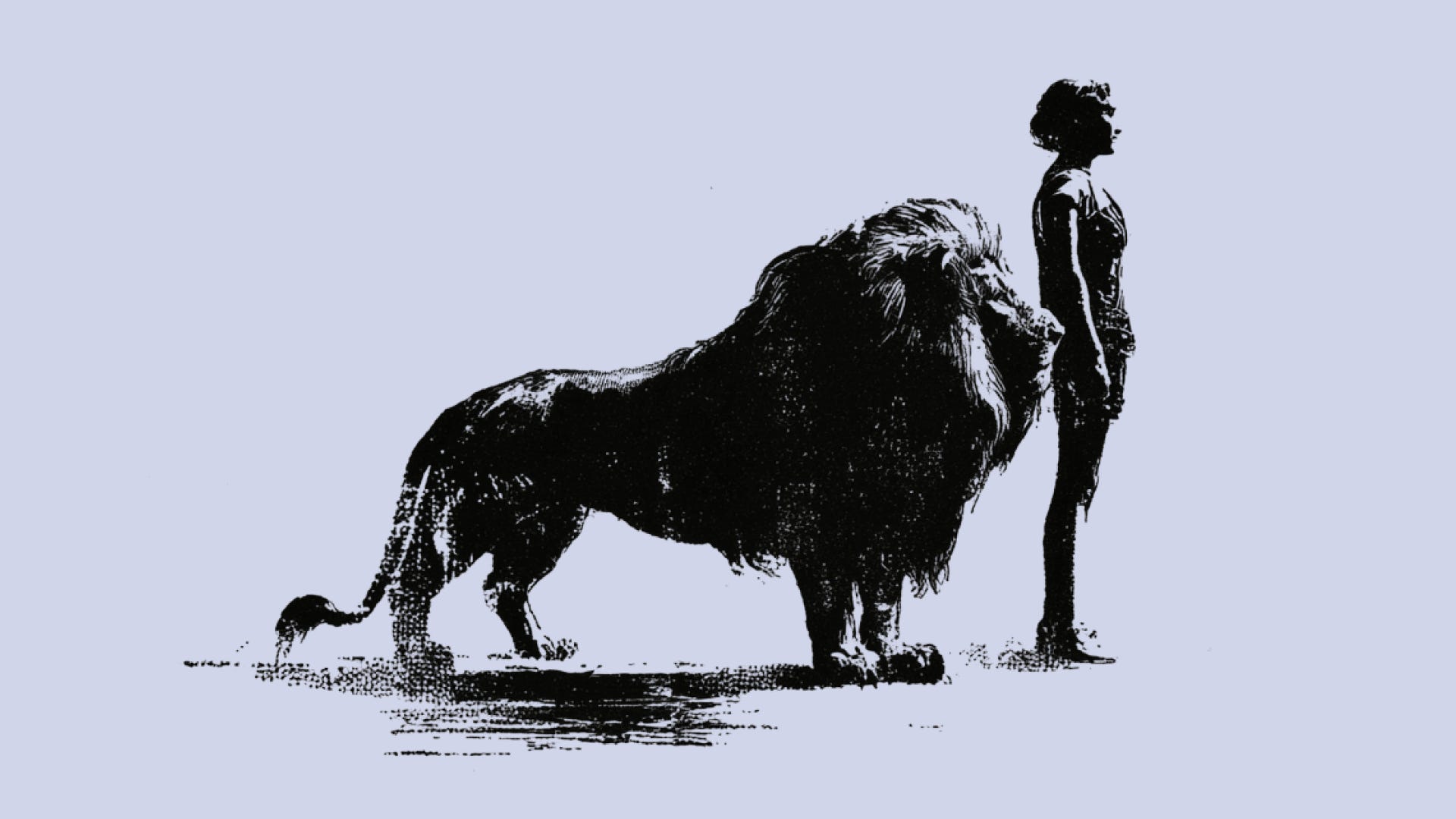
I often say that I have two characters inside me: a lion tamer and a lion. The lion is my creativity. Some days the lion has a lot of energy and wants to show off her impressive voice. Other days, she flops lazily on the ground, swatting flies with her tail, and no amount of prodding can get her to move. My job, as the lion tamer, is to understand how to coax my lion into action on more days than not.
After working on a novel and other artistic projects, I have a pretty good idea of the conditions needed for my lion to willingly, even enthusiastically, cooperate. They’re nothing revolutionary — sleep, exercise, friends, and satiating the lion’s great hunger, which no amount of meat can achieve. She needs IDEAS. WORDS. GREAT ART. Which means reading, visits to art museums, and his favorite delight: AN ARTHOUSE FILM. She is an intellectual snob.
If more of the execution of company building can be automated with technology, what’s left is ideas, in other words, the lion’s job. Which person to hire? How to make a product that is truly different from anything out there?
You can’t whip lions into performing. This is why I’m skeptical of founders who now treat entrepreneurship as a 24/7 grind. That might have worked when execution was still a moat. When you could win by calling more prospects or building quicker than your competition. It doesn’t work when the job is mostly ideas.
I’ll be writing less here now as most of Ms. Lion’s energy will be going into Second Chapter. But she still gets restless and curious about things further afield. When she does, she’ll come back here with an interview or an essay.
Keep feeding your lions, friends.
In the meantime, sign up at Second Chapter to receive our first content when it goes live in a few weeks. Or watch our launch video below, filmed by yours truly in the pouring rain at the Barbican. Ffs London.