


Elea.notes is a newsletter about tech, writing and creativity. If you haven’t subscribed, join me.
Writing can be an edge in any industry—from investing to neuroscience. You just need interesting ideas to share…and the courage to press publish.
When people ask me how I found the courage, my answer is usually that I was forced to develop it as a journalist. Dealing with trolls on Japanese Twitter at the age of 22 will give you a thick skin.
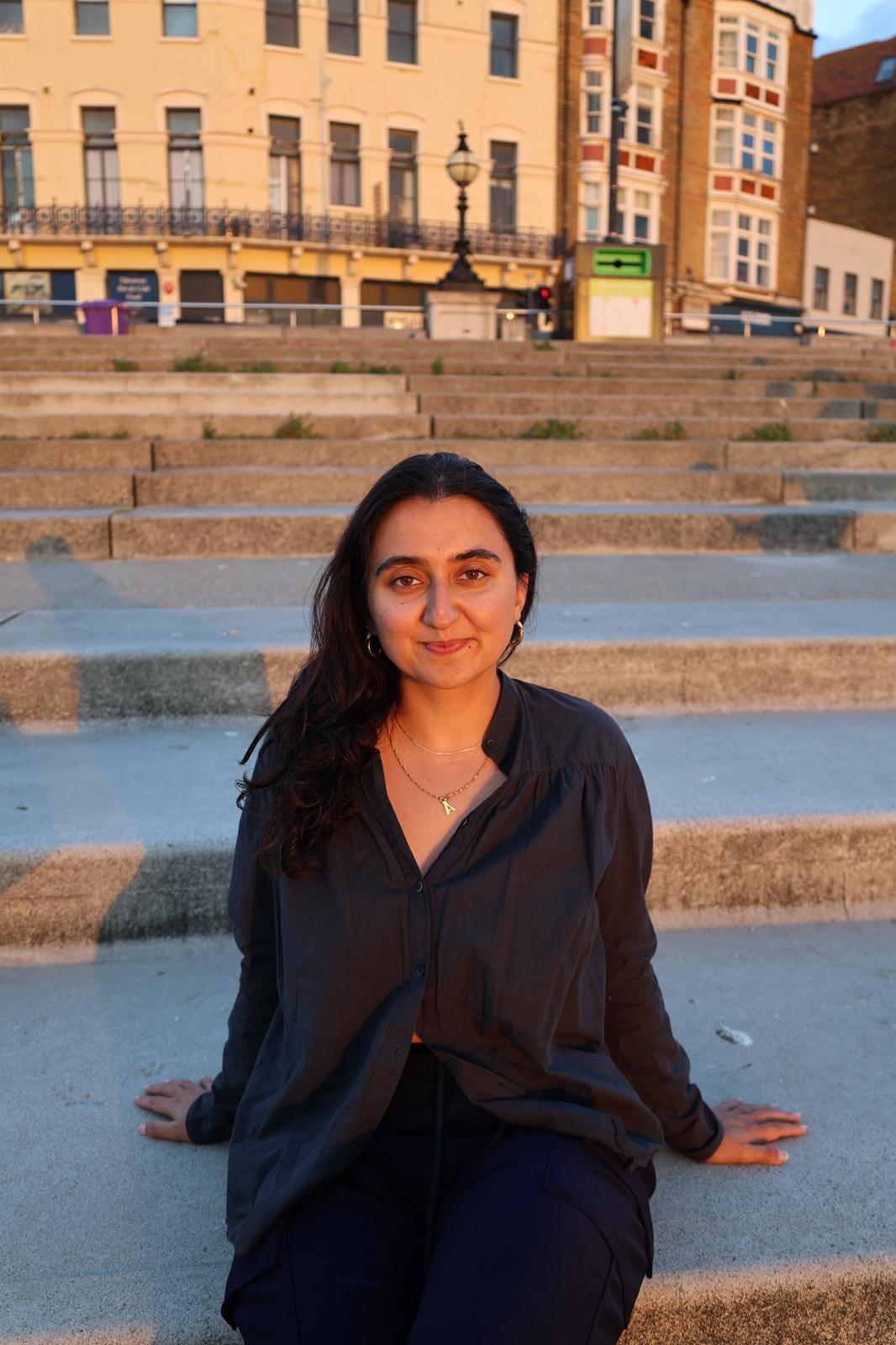
One of the people who exemplifies the same courage is Anisah Osman Britton. She was already a successful founder when she began writing publicly about tech through op-eds and journalism and is now a sought-after commentator and presenter. Anisah was awarded an MBE in 2023 for services to diversity in tech and is a Forbes 30 under 30 honouree.
Why this matters: Anisah is the rare person who can write code and write compellingly about tech—and we need more of this combination if we want to hold the industry to account.
Her story shows how writing, both on LinkedIn and through traditional media, can open doors. Read to the end for her recommendations on how to get started.
Our conversation, edited for clarity and brevity, below.
Have you always loved writing?
Yes, always. I’ve written from a really young age. At college I wrote essays, short stories and plays. Then I turned 18 and didn’t do anything with it. It didn’t seem like a legitimate path to take as a career as an ‘academic’ student. All the writing I did after I finished school was in my journal.
How did your tech career start and your writing career start again?
I fell into tech accidentally after wanting to be lots of different things including a pilot and an actor. I ended up running 23 Code Street, a women’s coding school, here and in India. Me and my marketing manager [from 23 Code Street] were at every tech event for a few years—every stage, every panel. The editor of the Evening Standard was at one of the events and asked me if I wanted to write. I said I would need a good editor—I hadn’t written in a long time. But that’s how it came about. An article in 2019 for the Evening Standard that was my first big commission.
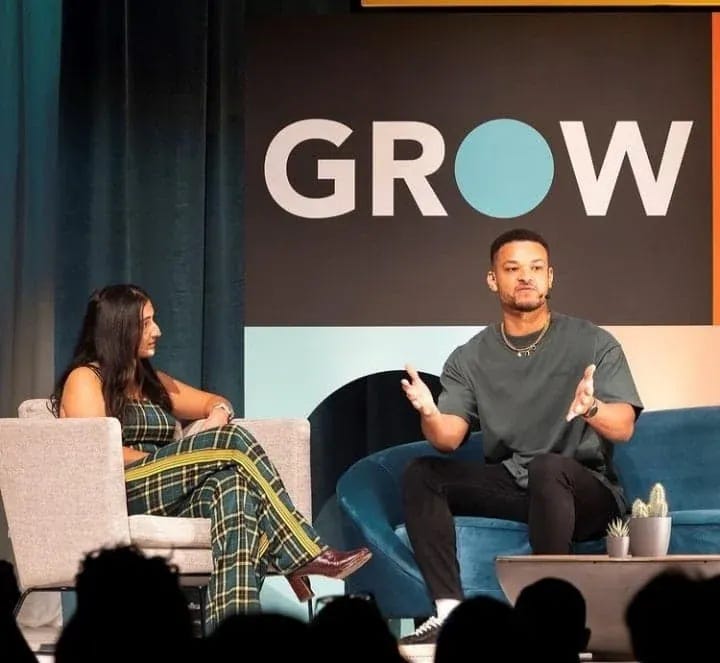
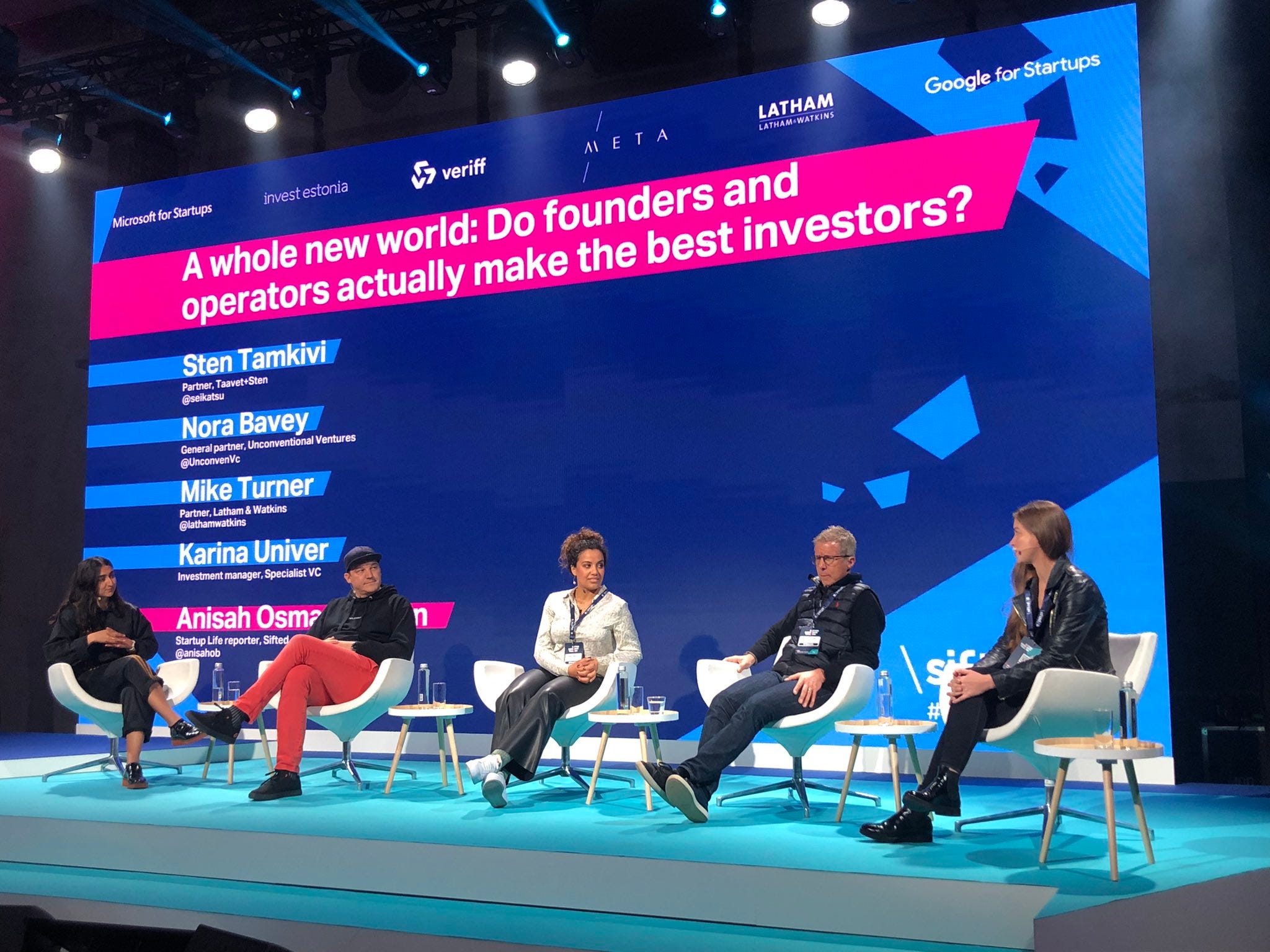
After that, people wanted me on stage, wanted to talk to me more. I wrote pieces in media and started writing for Sifted, initially writing op-eds before running the Startup Life newsletter. It made me more visible and more credible.
What was this fateful piece for the Evening Standard about?
It was about how to plug the digital skills gap. When I took a look at it this morning, I realized that my view of tech hasn’t really changed—which is quite nice to see. It’s just the industry around me has changed.
I have a core belief that innovation has to be built to serve everyone. That’s why I started the coding school, and the focus was on coding as the core skill to make innovation serve everyone. Now I’m focused on whose stories we tell and why. The mission has stayed the same, but the way I’m trying to achieve it has changed.
Let’s back up. How were you going to achieve that mission of innovation with the coding school?
Teaching people to code was a small part of achieving that mission. The main part was getting more people who understood how products were built.
In a previous role I had, we worked with big corporates and innovative startups—we were the bridge between them. The C-suite from the corporate side were always men who tended to have more technical understanding, and they were the ones who spoke up in meetings.
My goal was to achieve more variety of thought around the table. If you could understand how products were built, you could sit at the table and decide the direction of products and markets. I often found women lacked the confidence to have those conversations without a deep understanding [of the tech], whereas men didn’t feel like they needed to have a deep understanding to have an opinion.
“My goal was to achieve more variety of thought around the table…I often found women lacked the confidence to have those conversations without a deep understanding [of the tech], whereas men didn’t feel like they needed to have a deep understanding to have an opinion.”
You’ve shifted from teaching code to writing about tech. How does writing serve that same mission?
Let me zoom out for a minute. Storytelling in tech has always existed to simplify the innovation for those outside the industry—the end consumer. A good example is Apple. Their storytelling and marketing campaigns enabled people to see what they could do with the product, not just what the product does.
I think we’re now seeing the opposite happen, where storytelling is used to create hype and deceive those who aren’t technical—whether that’s consumers, investors, or even journalists. There’s an idea that what exists now is too technical for normal people to understand. This is bullshit. I’m annoyed with how the narrative is being manipulated.
“Storytelling is used to create hype and deceive those who aren’t technical—whether that’s consumers, investors, or even journalists…This is bullshit. I’m annoyed with how the narrative is being manipulated.”
Take crypto, for example. A certain group of people told a story, people jumped in, and then they got the rug pulled out from underneath them. Now with AI, companies are doing similar things.
Personalities also play a big part in tech and that’s down to their storytelling. Very few people are investigating what they say and sometimes what they say is inflammatory because they know it will bring them attention. But we all know having a personal brand is now a big differentiator when it comes to hiring or raising.
My role is to demystify what tech is today and foster conversations—on stages and in my writing—about tech. I want to base those conversations in what is tangible, what is actual fact, not hype.
Is there any place for hype?
Hype has always existed in tech. I will watch every Apple developer conference, every Google one because I buy into the hype. But now, we’re seeing more and more people try to sell a dream to build a dream without being honest about what exists.
This goes hand in hand with it being cheaper to build a business and the democratization of open media. This democratization has almost gone too far the other way—people know how to game the system. There’s deception in, I’d say, 80% of the conversations I’m hearing.
It seems to me there’s also a disconnect between people building the tools and those writing about them. Technical people aren’t often the ones writing.
Technical people aren’t often writing publicly. They’re used to academic writing—explain everything, back it up with sources. But we’re seeing that change with more technical people on stages and podcasts.
AI might plug a gap in being able to simplify some of that language. I’ve seen some technical influencers online asking ChatGPT to create a simplified version. But we still need stronger personalities to come out. We’re not seeing much of that in Europe, but more in the US.
Tell me about your newsletter, Brown Bodies, which is in a totally different area to tech.
I wanted to write something that reflected the conversations I was having with friends. The combination of love and sex as a topic was so underrepresented, especially for South Asian communities. I wanted to create a space to have those conversations and flex my writing and interview skills in a different industry.
Substack was such a lovely way to start something new. You have a community, you see different types of writing, it feels a bit more forgiving. Up until then my audience had been tech. With Brown Bodies, I could just be Anisah. I also liked that Substack has the option of podcast and voice note functionality too, though I haven’t used them yet.
Do you use AI tools in your own writing?
I love this question. I don’t use any AI tools in my own writing. Anything that I write for media is always entirely my own voice which I think is my USP.
I do use ChatGPT for other things, though, such as my work for Unlock VC. We built a GPT trained on our documentation. I can feed it ideas, paragraphs, or notes I’ve written on the tube and pull it into the next newsletter. Out of the four of us, three are part-time, so it’s about leveraging myself to be able to do more, while still representing what we do well.
I also use Perplexity for research and Gamma to pull together pitches for work.
What has writing unlocked for you?
Writing enables me to be the most honest version of myself. Every piece of writing that I do, including in media, feels very truly me. It’s given me the power to tell the stories that I want to be read and seen.
The other thing is journaling. It clarifies what I want and what I believe and what I think—I bang on about this. Writing has become a key part of my career. It’s opened a lot of doors—through publications or LinkedIn. It’s given me access to people who might not have found me otherwise, had I just focused on speaking.
“[Writing has] opened a lot of doors—through publications or LinkedIn. It’s given me access to people who might not have found me otherwise, had I just focused on speaking.”
How can someone get started with writing?
Don’t get decision paralysis—just choose one platform to start writing on. Choose a theme or industry you want to write about. Go for quality over quantity, even if it’s one piece a month or every quarter.
Most importantly though is write the way you speak: personality in your writing will help you cut through the AI noise. If you want to write for publications, I suggest starting with niche media like newsletters in your field or pitching in spicy op eds. Also, do your research. Use tools to help you.
Finally, don’t worry if in six months time you read back and it sounds shit. That’s the point. You’re meant to get better.
📚 Reading this week
The only writing tip you will ever need.
Nominations for Japan’s buzzwords of the year include “chappī,” a nickname for ChatGPT, and “nuikatsu,” the practice of taking your stuffed toys out with you. (And if a certain OS reads this far in the newsletter he is going to make fun of me for Labubu nuikatsu.)
Half of UK novelists believe AI is likely to replace their work entirely.
“Start with why — not AI.” How the NYT is using AI in the newsroom.
“Ideally, you go into a story not knowing what you think yet, not having a preconceived idea of what the story’s going to be. If you do, then you’re not truly learning the story.” (h/t Harper’s Bazaar’s A Closer Read)
Thank you for reading! If you have recommendations for articles I should share or people I should interview, please reply to this email.
If you’re not yet subscribed, sign up.
Love this Eleanor. And thank you for sharing Anisah's story. It is so inspiring to read these different stories and discover how people 'fell into' tech.