



If you’ve ever read about astrology in places like Cosmopolitan, Teen Vogue, or Refinery29, chances are you have come across Narayana Montúfar’s writing. Named one Vogue’s 13 astrologers to follow in 2021, she was senior astrologer for Astrology.com and Horoscope.com from 2011 to 2023 and has published two books. Her insights have reached millions — an achievement few writers can claim.
I’m fascinated by writers who make technical subjects feel personal, especially when writing for wide audiences. Narayana describes herself as a bridge between the celestial and the earthly — and in practice, that means translating the mathematical language of planetary cycles into something that helps people understand their own lives. That’s a skill that goes far beyond astrology, and her experiences have lessons for any communicator.
We talked about her path from Mexico City to California, translation as empowerment, and how personal writing has helped her understand herself better.

Astrologers are translators. Astrology is technical! One of the reasons people shy away from the practice is that the complex and technical terms make them feel disempowered. In any field, good communicators and practitioners translate the hard stuff into something people can use.
Writing is a window to figuring yourself out. The reflection behind a personal essay cracked open a chapter of Narayana’s life she hadn’t truly understood.
Write the thing that doesn’t exist yet. Narayana couldn’t find a book on planetary cycles, one of the foundations of astrology, so she wrote one. If you’re looking for something that isn’t out there, that’s your signal.
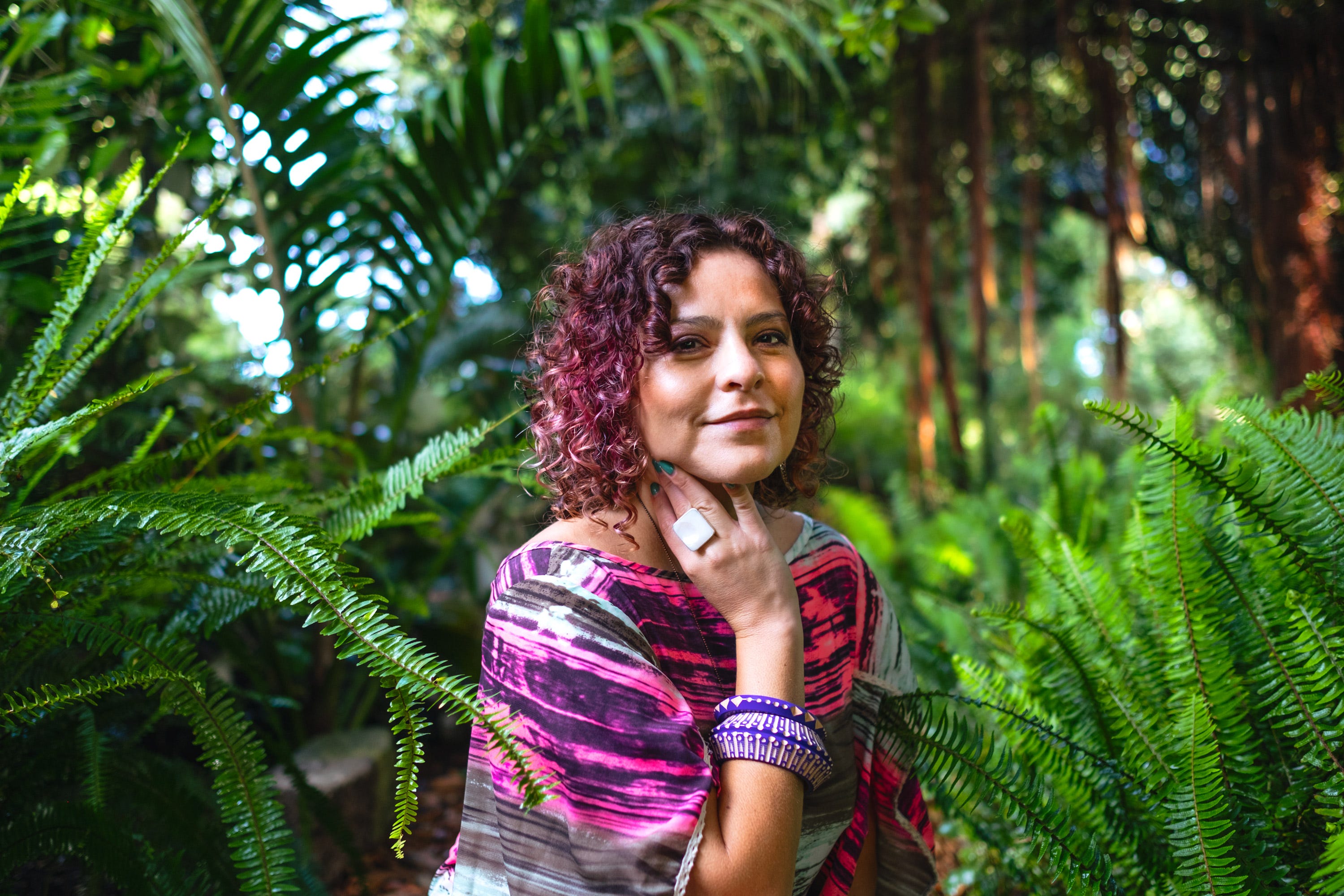

How did you go from Mexico City to the US, from writing about music to writing about astrology?
Love brought me to San Francisco — my first husband. When I got there, I wasn’t sure what I wanted to do with my career. I ended up landing an internship with the people doing California Home+Design and 7x7 magazine. That led me to the music industry — I love music, I go to shows all the time, and I have a record collection. I did some editorial work — I was at Spin for a while, covering the Latin American music scene here in San Francisco, interviewing musicians. When that fell through, I asked myself: Do you really want to continue in this industry? I saw a job looking for a bilingual editor for Horoscope.com. I decided I was going to get that job.
I found out later that they had already decided on another editor and that they interviewed me as a courtesy. But because I went in knowing I was going to get that job, I got it. That was 2011, and that’s what started my journey in astrology.
I spent years editing and translating content, slowly absorbing the subject. Then one day, I realized the company offered $1,000 a year for education, and most people didn’t use it. So I started going to school on the weekends to study astrology.
That decision changed my life. All of a sudden, this world opened up. It was like touching something I already knew. Everything made sense — my life, my childhood, my trauma. Everything clicked.
At that time, I was a managing editor. I’d climbed the ladder in corporate America, and it was good, but strange. I was always dealing with people who didn’t understand astrology. Developers, managers, suits. When I first started that job, the owner of the company didn’t even believe in astrology. There was constant pushback, but by the time I left, 13 years later, everybody knew their Big Three. Everybody could tell you, “I’m a Virgo Sun, Leo Moon.” The culture had shifted.
But I didn’t like where media was going. Everything was about SEO, about superficiality. So I decided to switch titles, to go from managing editor to senior astrologer. And for the first time in my life, I felt like I was doing something that matters, that’s helping people. I felt alive.
Have you seen a broader change in people’s receptiveness to astrology?
I’ve seen people waking up: to their gifts, to their desires, to their powers. And I think it’s going to continue. We had to do a lot of work to unplug from what previous generations taught us, but today’s children don’t have to do as much work.
It’s amazing to see people questioning their lives. “Why am I doing this? Is this making me happy? Do I want to get married? Do I want to have children?” That’s part of my job — to help people understand themselves and their own conditions.
You’ve written for publications with millions of readers. When you sit down to write for that audience, how do you make something feel personal when it’s going out to everyone?
It was a learning curve. I’m a big nerd. Because I’d studied with very technical people, I was starting to write for other astrologers. And people would tell me, “Not everybody’s an astrologer. You have to translate it.”
Astrology is a language. People think it’s a predictive art, and yes, you can predict a lot of things, but it’s really about understanding how the cosmos works — the astral weather, I call it. When astrologers are writing, we’re looking at symbols. We’re reading the mathematical relationships between the planets. So we’re translators, really. We’re translating symbols into words.
“We’re translators, really. We’re translating symbols into words.”
Writing for lifestyle publications like Parade and Cosmopolitan really helped me develop that skill. I approach the planets as archetypes — it’s a little bit Jungian, even though I don’t consider myself a Jungian astrologer. I try to inspire people to see the planet within themselves.
A lot of people don’t like astrology because they feel like they’re giving their power away — and the problem is, we’ve had a lot of astrologers practicing that way. Someone has a Saturn transit, and the astrologer says, “Life is going to suck for the next two years.” That’s disempowering.
If you stay in technical language and don’t translate, people feel shut out of their own journey. So I try to be honest about what’s happening. If you’re going to have a Saturn transit for the next two years, you need to embody your inner Saturn. Saturn is the sage, the inner teacher, the great rewarder. Books get published during Saturn transits. People get married — or leave broken marriages. So, how are you going to prepare? How can you make the best of that storm?
When I’m writing a horoscope, I inspire reflection, and I inspire empowerment — through the archetypes.
That’s such a good lesson for anyone communicating anything. You’re not just speaking in one direction — you’re helping the reader take the wisdom you’re sharing and do something with it.
Exactly. And I tell people: whatever you read, whatever you see — look it up. Even what I say. Don’t take it as done. Fact-check it.
I always tell my clients: if there is one single moment, even a tiny one, where you feel disempowered by a spiritual practice, reconsider it. Your body knows. That’s the moment where spirituality gets used as a tool of control.
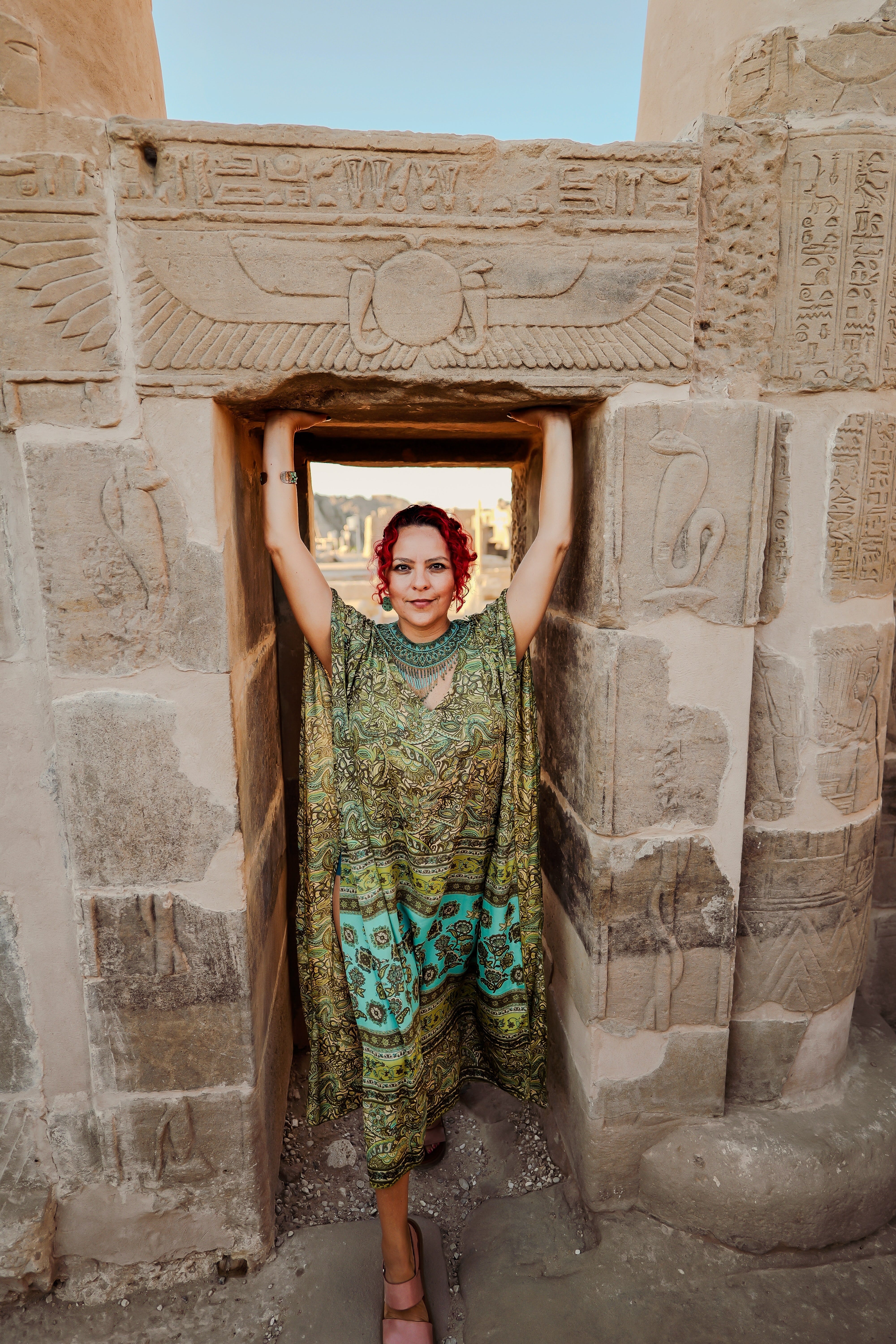
As a bilingual person, how do you navigate writing about astrology across two languages and cultures?
While I’ve written astrology in Spanish extensively in the past, these days I focus more on English since I’ve been living in California since 2007. But yes — Latinos have always been much more into astrology and the esoteric arts due to our deep cultural roots. In some form or another, we’ve been exposed to tarot, magic, astrology, shamanism. For us, it always made sense that the cosmic forces aren’t random and that there is a method to the celestial madness we live in.
When it comes to astrology going mainstream, American culture is the one that has shifted the most in the past decade, which has been amazing to watch. Overall, humans are reclaiming their connection to spirituality in a self-empowering way. And this doesn’t seem to be a trend — it’s a true rekindling of ancient knowledge.
You’ve also written two books — what made you feel like a book was the thing you needed to write?
In 2020, a friend and colleague said, “Somebody wants me to write a book, but I can’t. I’d like to recommend you.” I was competing with another astrologer who had a much bigger following, but they ended up giving it to me.
The process of giving birth to a book is something so special. It’s like a baby. Especially because the world is moving into reels and three-minute, five-second things, giving birth to something that long and deep is really meaningful.
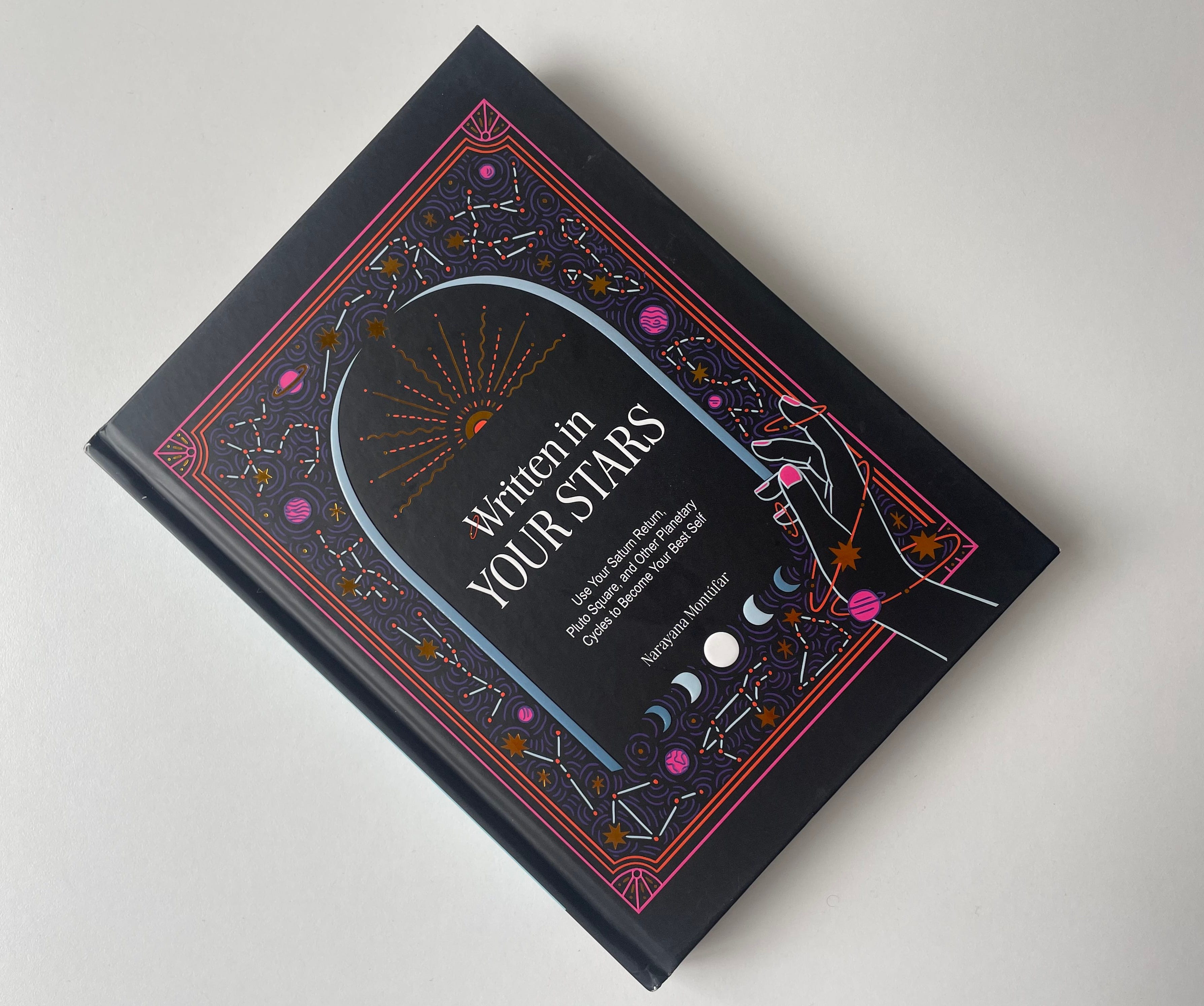
I got fascinated with the process and decided I didn’t want to be a one-book author. The moon book was a collaboration with the publishing company — we settled on the subject together. But it's very different working with someone else on an idea versus having your own idea, which is what happened with my second book, Written in Your Stars, which just received the Indies Foreword Nomination for 2025's best book in Body, Mind, and Spirit.
One of the things I always struggled with was finding a book that talked about planetary cycles, which is one of the foundations of astrology. So I wrote the book I wished I’d had when I started studying astrology.
I enlisted the help of my husband, who’s an aerospace engineer, for the technical and astronomical parts. And I did all the art direction myself, because I care about that.
What does writing unlock for you as an astrologer?
Writing is something magical. The more I dig into spirituality, the more I see there’s a power in the pen.
You’re able to get off your chest so many things that you wouldn’t even be able to tap into otherwise. I’ll give you an example. An editor assigned me to write my Saturn Return story. Saturn Return is one of the most well-known concepts in astrology, that moment when you truly become an adult, around age 29. I had downplayed mine because I have a good relationship with Saturn.
But when I started going back into emails and photos to write that article, I ended up sobbing. Writing helped me realize how important that moment was. The article was ultimately called, “My Saturn Return Brought More Than Adulting; It Was About Starting a New Career and Leaving a Broken Marriage.” Because right before I got the Horoscope.com job, my first marriage was falling apart. Everything felt like it was falling apart, but it was because I was about to start the next thing.
Writing that article was a deeply personal exercise. It was an assignment, but it became so much more. That’s what writing does — it’s a window to figuring yourself out.

Thank you so much for reading! You can discover more about Narayana on her personal website. See you next week.
Loved chatting with you about my writing and creative process, Elenor. Thank you for the feature and your thoughtful questions.