



So far, this newsletter has mostly concerned itself with people who write for an audience: wealth managers for clients, priests for congregations, journalists for readers. But equally important is the writing we do only for ourselves.
I have many dogeared notebooks at home, the contents of which are highly correlated with whether or not “shit was going down” in my life at the time that I filled them. Definitely not for public consumption. They did, however, help me process things.
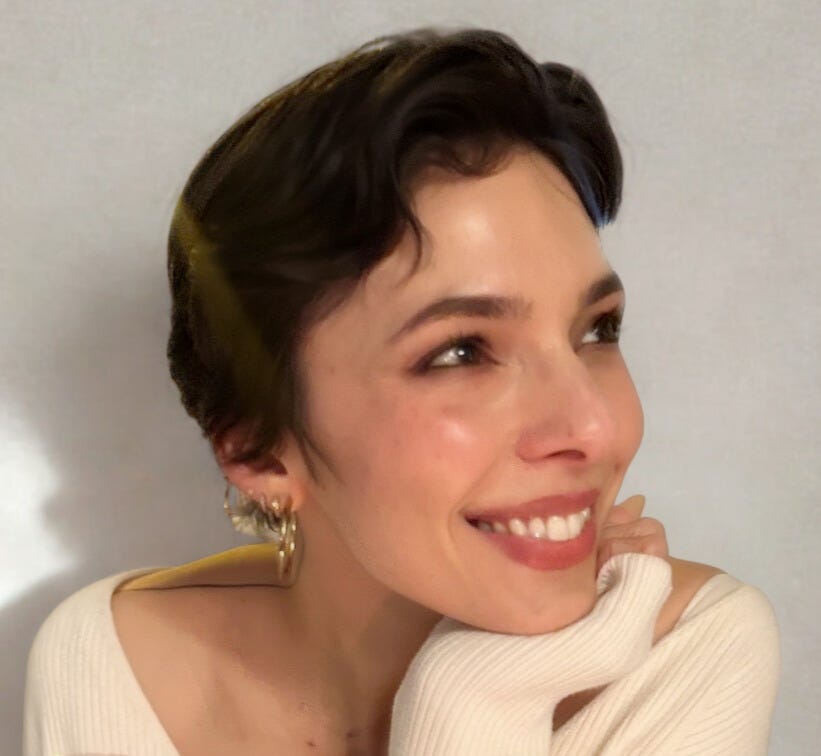
That’s why I was excited to speak with Berlin-based Meera Innes, a writer and facilitator using journaling as a tool to help people connect more deeply with themselves—and show up more fully for their communities. We discussed her transition from tech, feeling strange calling herself a “writer” when she had mostly been writing for herself, and why journaling is the easiest form of self-care to avoid.
I’m traveling to Panama this week for work, and I have a notebook tucked in my bag with some of Meera’s prompts (see the bottom of this newsletter) jotted down.

Journaling is a difficult, but rewarding form of self-care. You might be able to spend a yoga class distracted, but you can’t avoid yourself on the page. Because journaling can be daunting, Meera starts people with freewriting.
The more deeply connected we are to ourselves, the more deeply we can connect to one another. Even if our notebooks are just for us, journaling translates to a richer life off the page.
People are craving experiences and communities off their screens. Meera predicts journaling will become a more important practice, and notes that people at her workshops love to stay and connect even after the pens are down.

Transition from tech to writing
Tell me about your career and how you came to writing.
I’ve been working in tech and startups for a long time—over a decade at this point. Eight years ago, I moved into VC with a focus on organizational health and cultural development, with a view to supporting founder mental health.
Ironically, I had a huge burnout. I was trying to support other people, but I didn’t have any support. There’s something I always say about working in tech: every startup is a Neverland, and every startup looks for a Wendy to take care of the Lost Boys. Usually that Wendy caretaker role gets assigned to a woman by default, whether or not she’s in a leadership position. I leaned into that role fully, but I wasn’t thinking about what I needed.
Then I started freelancing for Google for Startups—that’s when I got into writing full time. It took me a long time to start writing professionally because I brought it as a skill set to all my work until then, but it was just something I did. It didn’t occur to me to take it seriously as a professional avenue.
I’ve always had a narrator in my head. Now, through a neurodivergent lens, I understand that was maybe my brain’s way of helping me process—by explaining everything to me the same way I would read a book. So storytelling has always come naturally to me—everything happening around me was always a story.
I also have a narrator in my head, too. I met someone recently who does not have one, and it freaked me out! So you had always written but it took a while for you to accept that your job was writing.
When I started freelancing, I didn’t call myself a writer. Then I asked a friend of mine for advice—he’d been through a major career shift—and he said, “Well, the first thing you have to do is start calling yourself a writer, because no one’s going to employ you until you do.”
It can feel like such a lofty title.
Up until that point, I was just writing for me. Whenever I introduced myself as a writer, people asked me if they may have read something I’d written, and I had to reply, “Well, nothing, but I’m still a writer.” A lot of what I’ve written hasn’t seen the light of day. So it felt really presumptuous to call myself a writer when there are certain ideas attached to that—expectations I was afraid I couldn’t live up to.
Journaling as a career
I can totally understand this. I feel strange calling myself a novelist when my novel hasn’t been published, but calling myself that forces me to step up and believe in myself. How did you go from freelance writing to becoming a journaling coach?
When my freelance work was wrapping up, I was asking myself a lot of questions, catalyzed by world events of the past two years: How did we end up here? How have we descended into such violence and lack of compassion, lack of humanity? What did we lose that made us so disconnected?
I think tech has a lot to do with that, especially social networks. It’s created all these pockets in this vast online universe where we can supposedly find like-minded people, but all it’s doing is creating more division. Instead of working in tech, I wanted to spend my life exploring what it is to be human.
My theory is that the more deeply connected we are to ourselves, the more deeply we can connect to one another. We have to take more responsibility for ourselves before we can think about taking responsibility for the collective. For me personally, journaling has been the best way to do that. There are other ways—I’m not saying journaling is the cure-all—but it’s what I know how to do. It’s the contribution I can make.
How long have you been journaling?
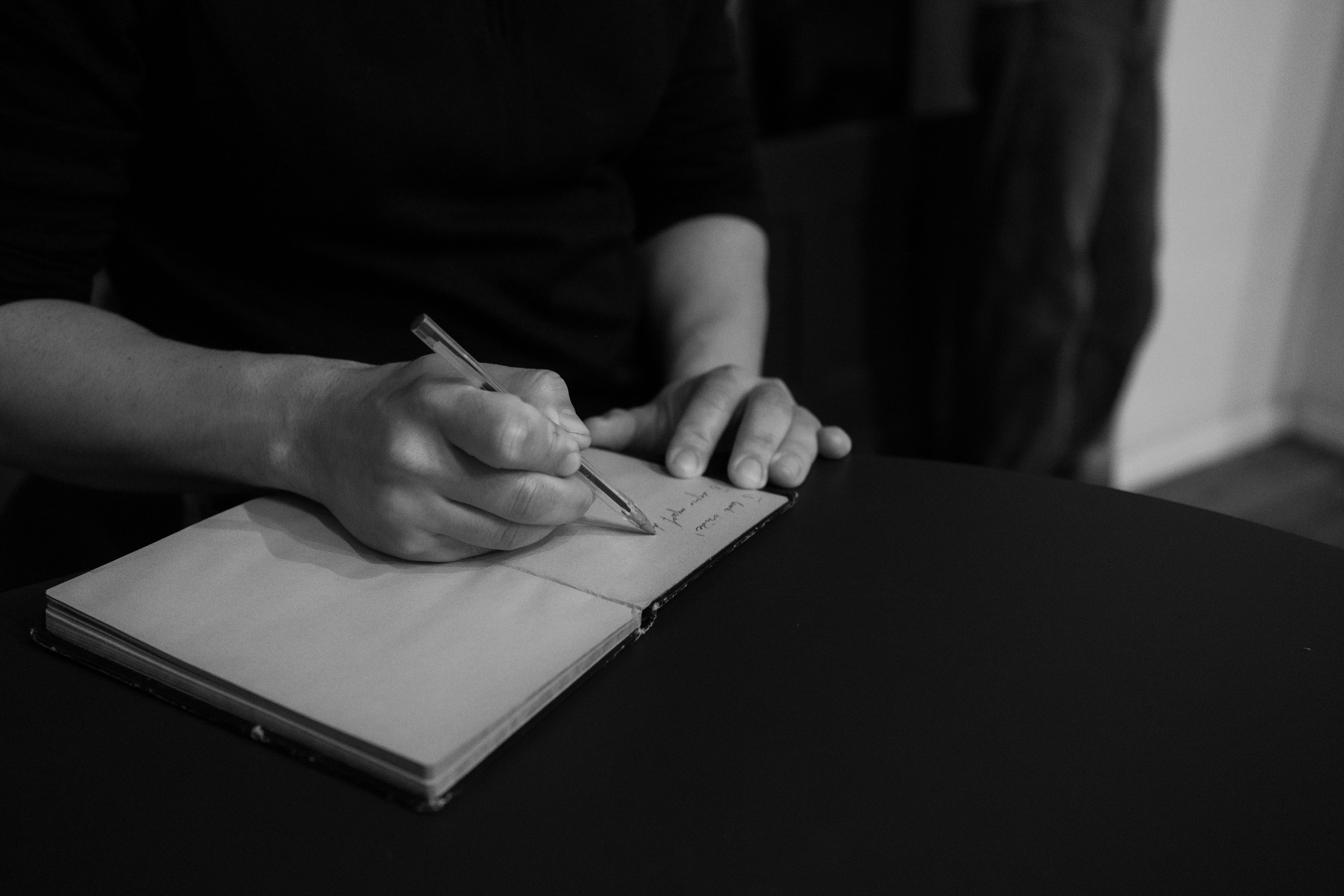
Just over 10 years, I think. It started as a form of self-interrogation because I wanted to understand myself better.
I have also used tools like meditation and breathwork, but I found they keep me inside myself. They aren’t for externalizing and examining. Putting it on the page is like getting a box of puzzle pieces, dumping it out, then sorting through everything so I can more clearly see the picture.
You’ve said that we’re all good writers. Why do you believe that?
For me, the most important aspect of being a writer is having your own voice. It’s not about skill, it’s not about vocabulary. It’s: how clearly and simply can you articulate what it is that you’re trying to say? As soon as we start overthinking it, we’ve already lost it.
“The most important aspect of being a writer is having your own voice. It’s not about skill, it’s not about vocabulary.”
When a friend of mine lost her mum, she wrote a really lengthy caption about who her mum had been and what her mum had been to her. It was so beautiful because she felt so strongly and clearly about her mum—she knew exactly what she wanted to say.
That’s what I think makes a good writer—when we tap into what we feel most strongly about and what we have the most clarity about. It doesn’t matter who challenges us on it. That’s how we feel.
Journaling feels like a way to let go of that overthinking. There are no expectations.
Yes, in theory. But one of the reasons I started this is because people are so uncomfortable about journaling. They find it really daunting to sit with themselves, express themselves, and see themselves mirrored back on a page.
It’s the easiest self-care practice to avoid, even harder than meditation and breathwork. We can numb and self-soothe with other practices, but we can’t avoid ourselves on the page. Writing is literally black and white.
“We can numb and self-soothe with other practices, but we can’t avoid ourselves on the page.”
The actor Dax Shepard did a podcast episode a few years back on breaking his sobriety, because that’s a cornerstone of his brand and identity. He said looking back, the first sign that he was relapsing was that he stopped his daily journaling practice. This had been his personal accountability tool, but at some point he thought he didn’t need it anymore. He stopped holding himself accountable.
Getting started with journaling and growing in your practice
How do you help people get started?
The very first tool I use is freewriting, because it helps build that muscle of writing without thinking. The idea is to take the judgment and the criticism and the thinking out of the writing process. Every single thing that comes into your brain—put it straight on the page and don’t stop.
A lot of people feel pressure to write something meaningful or profound. I’m like, “It doesn’t have to be remotely profound. It can be the most mundane stream of consciousness. You can talk about your breakfast. You can talk about how you slept. You can talk about the fact that your foot’s falling asleep right now.” Observe the sounds happening around you.
The amazing thing is that usually, when you’re in that flow of just talking about absolutely nothing without overthinking, something meaningful does filter through. Something that was buried suddenly surfaces, and then you can write through that.
How do you help people progress from there?
If I’m working one-on-one with people, we usually talk through a situation they’re in or a goal they’re working towards, and I use very prescriptive prompts. This is where I rely on my intuition to know which questions are going to take us a little bit deeper into surfacing whatever might be holding them back from answers.
I emphasize that I don’t have any answers for anyone. We all have our own answers. What I do is provide the questions and hold the space to help you dig deeper into those answers.
What are some prompts that you use to get people started?
I’ll share one of my favorites. I tell a story about my best friend who went on a date and got stood up. She was telling her best friend about it, and her best friend was like, “Why are you even surprised? You’re not pretty. He wouldn’t have found you attractive. You’re boring, you’re not a good conversationalist.”
People are shocked when I say that, “What a shit friend,” they say. And I say, “What if I told you that was actually her talking to herself?” The things we say to ourselves, we would never, ever say to another person. Why is it that we have different standards for talking to ourselves versus our friends?
Then the prompt is: think about a situation you’re in right now and write about it in the encouraging and supportive voice of your best friend or someone who really loves you. What would they tell you?
That’s often a very emotional practice for people. We realize that the compassion and support that we don’t show ourselves usually was there all along and is easy to access when we’re thinking about it through someone else’s lens.
Do you have a special notebook or pen that you like?
I like soft, paper-bound notebooks that I can just throw into a coat pocket. My journals get really beat up because I use them constantly. Moleskine do these great skinny, paper-bound ones that you can buy in packs of three.
I don’t buy myself nice journals, but for the last couple of Christmases and birthdays, a good friend of mine has been buying me these Louis Vuitton notebooks. The pages are monogrammed and so beautiful.
For pens, I always use the Pentel EnerGel. They come in lots of different colors and you can buy refills for them. I really like the burgundy one—I sort of switch between black, brown, and burgundy.
People looking for analog experiences and community
How do you feel being an entrepreneur in this space in 2026? To many people, what you’re doing might look really risky—and brave.
It feels early, but I’m used to feeling like this. When I first moved to Berlin eight years ago and was talking about founder mental health, no one was talking about it here yet, though it was a big conversation in Silicon Valley.
I feel like that’s happening again now. I can see how important journaling is going to be as a tool. Fortunately, when I really believe in something, I find it easy to commit to. But there’s a lot for me to learn as well.
You must also get good feedback from the workshops you’ve been doing.
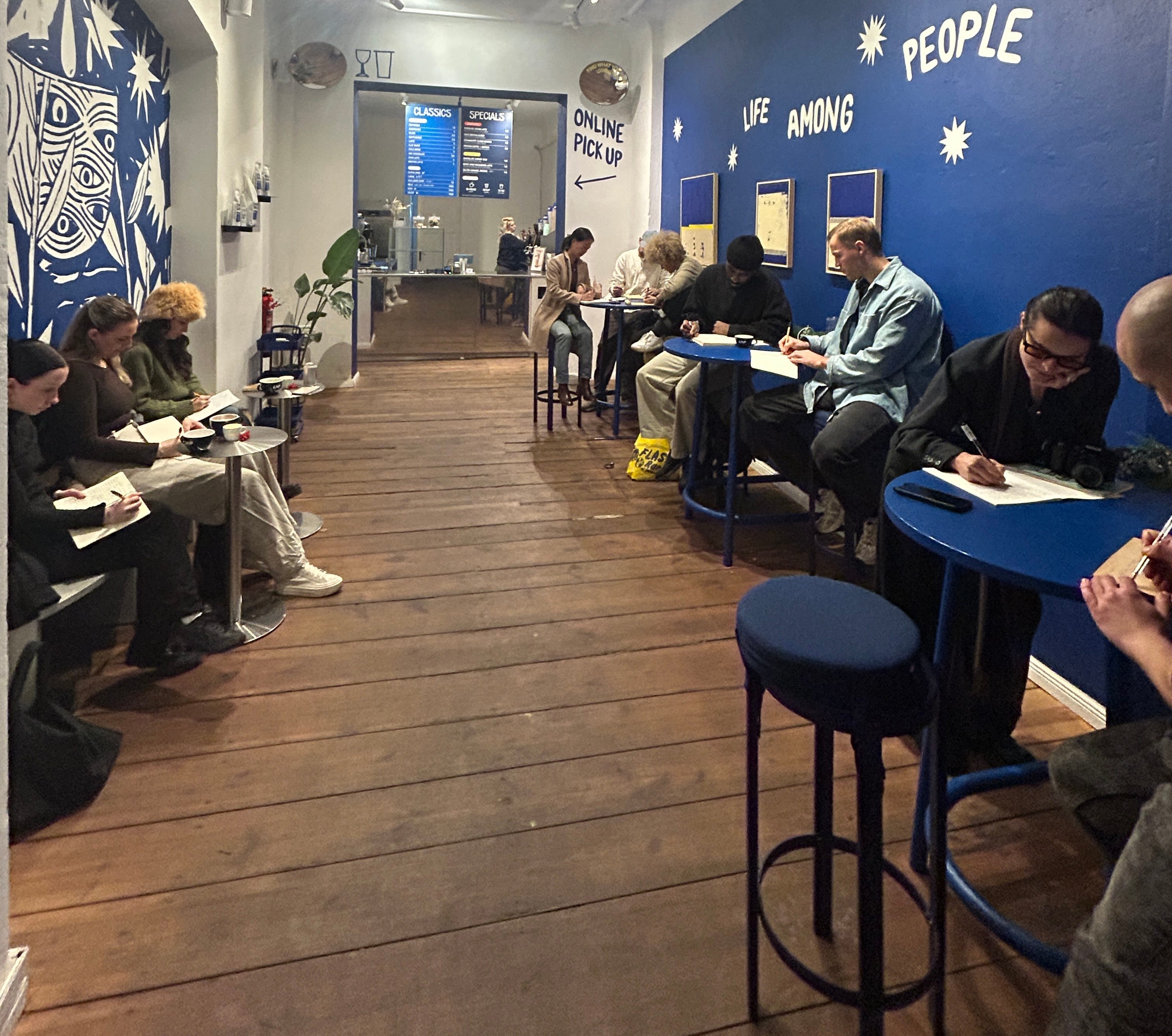
Bringing these communities together has been so meaningful. Afterwards, people always stay for an hour and a half or so and talk to the people they were journaling with—people they’ve never met before.
I’ve been doing some informal writing groups to stay accountable, and the same thing happens. People stay, talk about what they’re writing, and it naturally becomes a support group. People are craving this.
Exactly. That’s where it’s going. People are going to crave more cultural spaces where there’s no screens, where you can’t replicate the experience on a screen.
A lot of people are not rejecting tech per se, but trying to look beyond it. I think what we’re going to find when we look beyond it—it’s going to be a homecoming. We’re going to come back to ourselves.
This is one of the reasons why I’ve started this journaling initiative. I think we will see a return to analog, and when we do, being able speak for ourselves from a place of connection is going to be an incredibly important tool to have.

✨ Meera’s recommended prompts
When was the last time you screamed? If the urge has been heavy lately, I invite you to do it on the page. Take a freewriting approach to releasing any tension you’ve been internalising. Don’t worry whether it’s valid, what anyone else thinks, or how it sounds—we’re going for pure catharsis here, so let loose. And for goodness sake, don’t mind your language. Just unleash; stop when you run out of steam.
How was your 2026? We’re going to fast-forward to a rearview. They say hindsight is 20/20—today, let’s make it 2026. Start by dating your page [today’s date], 2027 and then reflect on this year as if it already happened. What does your best 2026 look like? What are the challenges you can anticipate—and how would you approach them accordingly? This practice is a great shortcut to clarity we didn’t know we already had.
Reflect on the events of the past week. As you do so, observe your voice. Is it neutral? Or is it critical? If you observe an inner critic, be curious. Is it yours? Is it true? As you go about your day, put some distance between yourself and the voice every time it comes up. Make witnessing it a daily practice; note your observations regularly and see if your experience changes with your lens.
For more, check out Meera’s IG.
Thank you for reading! Do any of you have journaling practices? Favorite prompts? Anyone prefer a computer for journaling? Message me on LinkedIn.