



I write to think, but I also write to attract opportunity. There’s nothing more exciting than getting a DM from a kindred spirit who has read your words and wants to collaborate or just chat over coffee. Those conversations then lead to the next piece…and on and on.
When Takuro Nuruki, the London-based founder of travel magazine Polaris, talked to me about the publication as a “space,” a “vehicle,” and a “think tank,” I knew he saw writing and publications like I do. The Japanese-English journal, on its third proper issue, has pulled a group of collaborators into its orbit, and it feeds the strategic design studio he runs alongside it.
Polaris tells stories from the world’s “borderlands,” providing “a crucial perspective needed in an intolerant era.” Reading it, there’s a sense of wandering — like catching a warm gust of air, or the rustle of leaves in a forest somewhere. The stories are ordinary but powerful; they never resolve into a tidy narrative. And they’re held to an exacting standard of design.
We talked about what prisons taught him about design, the difference between UK and Japanese design thinking, and why he likes to be a hands-off editor-in-chief.

A magazine is a space. It’s more than a pile of paper, it’s a place for stories and collaborations to happen. A magazine is also a magnet. Takuro describes Polaris as a kind of magazine think tank, where the publication brings in opportunities for new projects and work.
Use an acupuncture needle to have impact. Instead of looking for a huge solution to a huge problem, find the small place where you can intervene for maximum impact.
Quality creates deeper communication. High-quality design and editorial is the catalyst for deeper communication, and what separates a project from being dismissed as just another hobby project. Polaris, for example, is printed by a top-tier independent printer in Tokyo and the gorgeous layout and graphics jump off a bookstore shelf.
Our conversation, edited for brevity and clarity below.
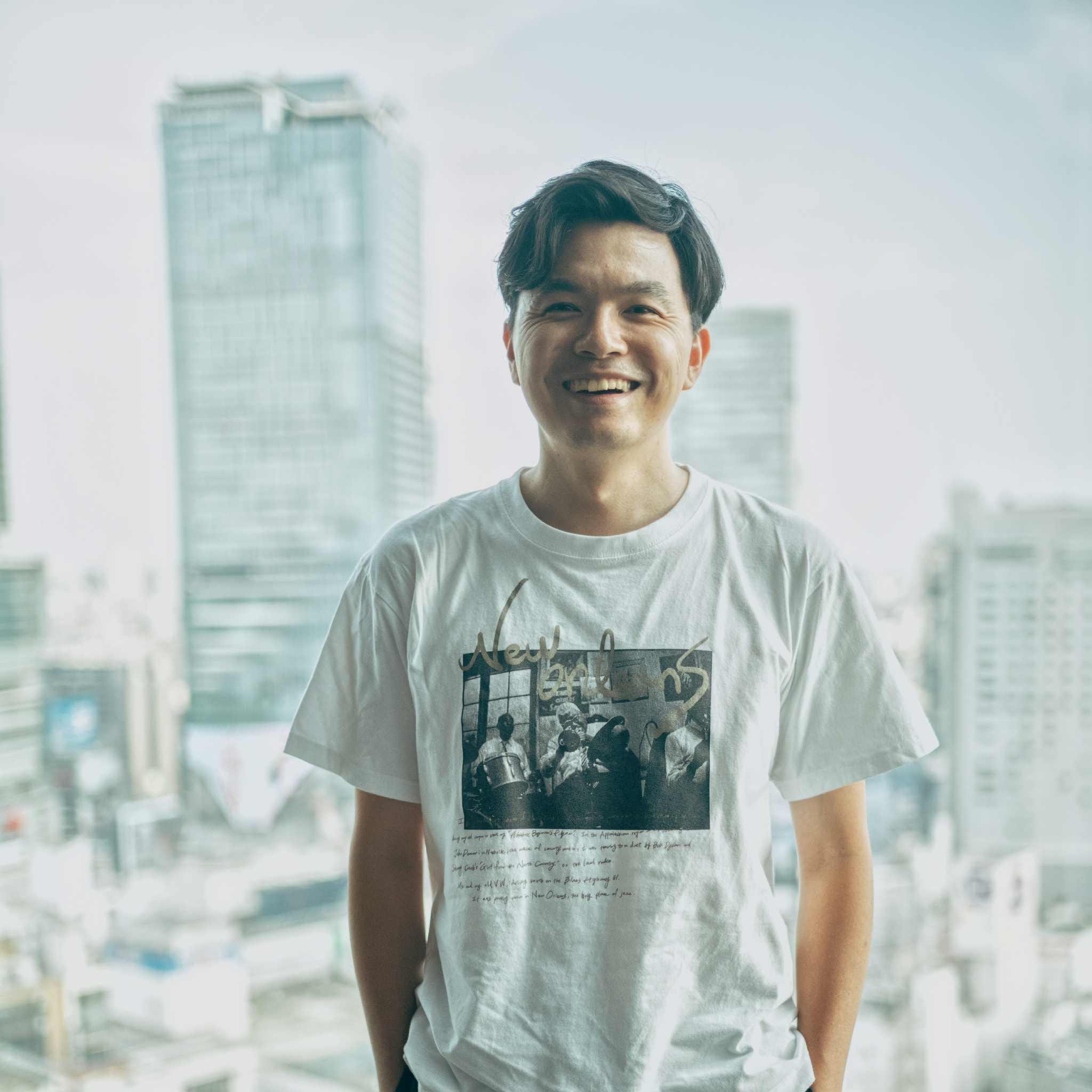

How did you start making Polaris?
My bachelor’s was in journalism, but I switched to advertising and worked at the Japanese advertising agency, Hakuhodo. Then one day, I came across an event held by a professor about the Institute of Innovation, a kind of design school, but not for designers, started by Japanese art university Musashino.
My job title at Hakuhodo was “strategic planner,” but the professor told me my job description should be “strategic designer.” In Europe or America, that’s a real title, but in my mind, a designer was a graphic designer. In Japan, design is about styling. It’s very surface-level, about aesthetics. In the US and the UK, it’s more strategic, more about human-centered design.
I started my master’s at Musashino. In my studies, I was asking questions like, “What’s the value of a paper magazine in modern society?” and “What’s the alternative value of travel?”
Why those topics?
My dream was to be a novelist. I like traveling. I like magazines. I didn’t mean travel in the “Instagrammable” sense — but travel being about encountering something new, touching someone’s life, seeing a different perspective.
I’m Japanese — Japan is geographically and culturally an isolated country, so travel means a lot. Travel isn’t just about physical moving. Travel means changing myself.
With Polaris, we travel to borderland areas, listen to people’s ordinary narratives, and try to interpret them and find value. There aren’t many media doing this. It’s not storytelling, it’s not dramatic. It’s not about entertainment.


How did you come to the UK?
The first [Polaris] was only in Japanese, and it was like a zine. An RCA professor came to my university, saw it, and said he wanted to distribute it in the UK. I thought, “Let’s do a bilingual magazine.”
The professor’s name is Judah Armani, and he runs a music label in prison called InHouse Records. His talk was so inspirational that I wanted to study with him or do some project with him, so I emailed him and traveled to Brighton.
What do prisons have to do with design? What did you learn from Judah?
Judah thought the work experience programs meant to prevent reoffending weren’t designed effectively. So he did music education as a volunteer in UK prisons and tried to understand prisoners through music.
He saw that it wasn’t a lack of education or work experience that was causing repeat offenses. When prisoners are released, they try to do something new in the community, but they experience discrimination, and they end up in their former community — that’s the main driver of reoffending.
So he created the music label to give a new community and new sense of belonging to prisoners and ex-inmates. After their release, ex-inmates belong to the music label as artists. I thought this was such a creative project when I saw it, and that’s why I moved to the UK. I enrolled at the RCA for an M.A. in Service Design in 2022.
Do you consider yourself a designer now?
I don’t think so. I don’t have design skills, I don’t have graphic skills. “Marketing” is maybe too commercial. And I don’t think I’m an editor — I know many professional editors, and I don’t have an editorial practice. A CEO, or a representative, and that’s enough for me.
Today I had a meeting with a Japanese media outlet. They were like, “Oh, you’re a design agency,” and I was like, “Not really.” They see us as design people, and I don’t like it — design sometimes creates a boundary.
I think I’m good at making context — behind the art, behind the objects. So I’d probably call myself a strategic planner. A strategist, if needed.
So you continued Polaris when you came to the UK for your studies?
I continued the magazine, and it became kind of like an artist collective. Now we have six or seven core members. We’re also always open to open submissions. We have eight chapters in the latest issue, but half of them are from open submissions.
You write in both Japanese and English, which is rare.
There are people arguing that the design industry in Europe and America should think more carefully and take in different ways of thinking — from Asia, the Global South, South America. They frame it as “decolonization.” I don’t like that word. To me it sounds like it will invite discrimination again. But this magazine is very much about putting Asian and Japanese design thinking next to European design thinking.
This paper magazine isn’t really profitable. But when people see it in the bookstores, in some gallery, they DM me, and say, “Let’s do a project.” So we do exhibitions, conferences, also some research projects with enterprises and the social sector. We’re kind of a magazine think tank. I’m also running a marketing studio.
You talked about magazines as something that can have impact and change society. Why do you think that?
We’re collecting people’s very fragmented, ordinary narratives. We can get new perspectives and new insights from that. Big media — digital media, or a commercial magazine — can’t do that, because they need profit, they need big money, they need scalability. Only an independent magazine can meet people physically and try to find something new in their ordinary lives.
If this were a novel, we’d need a plot. We’d need the narrative, something linear. But a magazine has chapters. If you’re interested in all the chapters, go deep. Just one chapter, that’s fine. Some people might like the front cover and just display it on a shelf. That’s enough. A magazine has all these alternatives. Artists and designers can join, and I can create something complex.
For me, a paper magazine is a space, a vehicle — many people, diverse people, people with different backgrounds can join.
But you still have a theme for each edition…how do you arrive at this?
Many magazines have a very linear decision-making system. The editor-in-chief says, “This is the core theme, now let’s look for contributors.”
We are the complete opposite. We collect open submissions, and we travel and meet people. If we collect three or four pieces of content, then we have a meeting and come up with a tentative theme. After we collect all the chapters, we change the theme again. We aren’t really committed to one thing in particular, but rather we focus on how we can use this medium as a space to collect many people’s voices.


This approach really resonates for me. I feel like a lot of media collects stories from their desks. We need more media that goes to the gemba — talking to real people and going to real places to gather precious insights that no machine can copy. You said you wanted to be a novelist when you were younger — you write for the magazine too?
I edited all the chapters, and I wrote two or three chapters in the latest issue. But my dream in this project is “autonomous design.” I don’t really like being an editor-in-chief — “This is my media, I’m the head person.” I don’t really like that.
It’s funny — I feel like many editors and writers now are being pushed to be a star — to build their brand, have their newsletter, their podcast. And it’s interesting that you’re saying, “No, I want it to be equal. I want this to be a space, a group.”
I want to see something different. I want to make friends — that’s my passion. That’s the reason I moved to the UK.
But that doesn’t mean that the quality of the design and the quality of the content aren’t really high. I don’t want to make a “zine.” If I’m going to make something, I’m going to do it well. And if you publish some ordinary stories in a low-quality fashion, people are just going to think, “Oh, this is just someone’s hobby.” But we’re serious.
Do you use AI for writing or for the magazine? Or for your design studio?
I use AI, but not for writing. For example, when we do large-scale interviews — 30 people, 40 people — we use Gemini for a very rough synthesis. 50% of the answer is very wrong, and 50% might be correct, but AI gives us a starting point and saves us long meetings.
The important thing with AI is that only people who have experience can make that judgment about what’s correct.
You talked about a movement toward having more varied perspectives on design — from South America, Asia, Africa. What do you think is the Japanese perspective that you bring, living in the UK? How have you felt different — seeing things in a different way than designers here?
Japanese culture, Japanese design, finds value in things more than human, like nature. UK design culture is more about industrial design, commercial innovation. They’re trying to hack people’s behavior — like cognitive science. But the Japanese focus, my focus, is not only about humans. It’s the relationship between human and others — human and human, human and nature, human and community, human and society.
The UK, the US design industry often talks about problems — what’s the solution?
We talk a lot about pain points. I definitely feel that when we talk about design in tech.
There are many pain points, but as a designer, we can’t change everything. Let’s be honest. We’re just humans. The most important capability of the designer is to find the intervention point — like an acupuncture needle. A small intervention, a critical impact that is big. That’s the thing I learned from Japanese design culture.
The prison project is the same, and that’s the reason I really like that project. And the magazine is also this — a small-scale project, but a critical intervention. An acupuncture needle.
Why do you think people are interested in zines and magazines now? I have so many friends in Japan selling zines at the Literary Flea Market.
In Japan, zines are getting more and more popular. People don’t have a space to raise their voices on social media. People are tired of algorithms, and they are looking for new places.
But I think it’s our responsibility to be well designed, to collaborate with a lot of people — that’s really important. Zines don’t really have this sense of responsibility — you’re just doing what you like.
Substack is kind of like the zine of the UK. Everyone’s like, “I started a Substack, I started this newsletter,” but often it is amateur.
We’re also going to start a Substack. But the important thing is, first we have the magazine. The magazine is a symbol, a showcase.
It attracts people, like a magnet.
Yes, it’s a magnet. Many zines or newsletters are just communicating in one direction. But this magazine is physical, high-quality. That’s important. This works as a catalyst to deep communication, whereas online communication is can be superficial.

Find stockists for Polaris magazine around the world or order a copy online on their website.
I’m running the inaugural Founder-Writer Collective event this Tuesday with Alys Key in London. The event is closed to registrations given how many sign-ups we’ve had, but follow our Luma calendar so you can get updates about the next event.
Thank you for reading! Enjoy the rest of your weekend. 🌻
It’s an interesting time to write as an ‘artifact’, both as its own design craft and as an affecting force.
I wonder what Substack could be if it had better features to host artifacts as a design craft. it could launch more physical artifacts like Polaris..