



Sadly, few people put “good writer” on the list of what makes a great CEO. Ted Merz thinks that’s about to change.
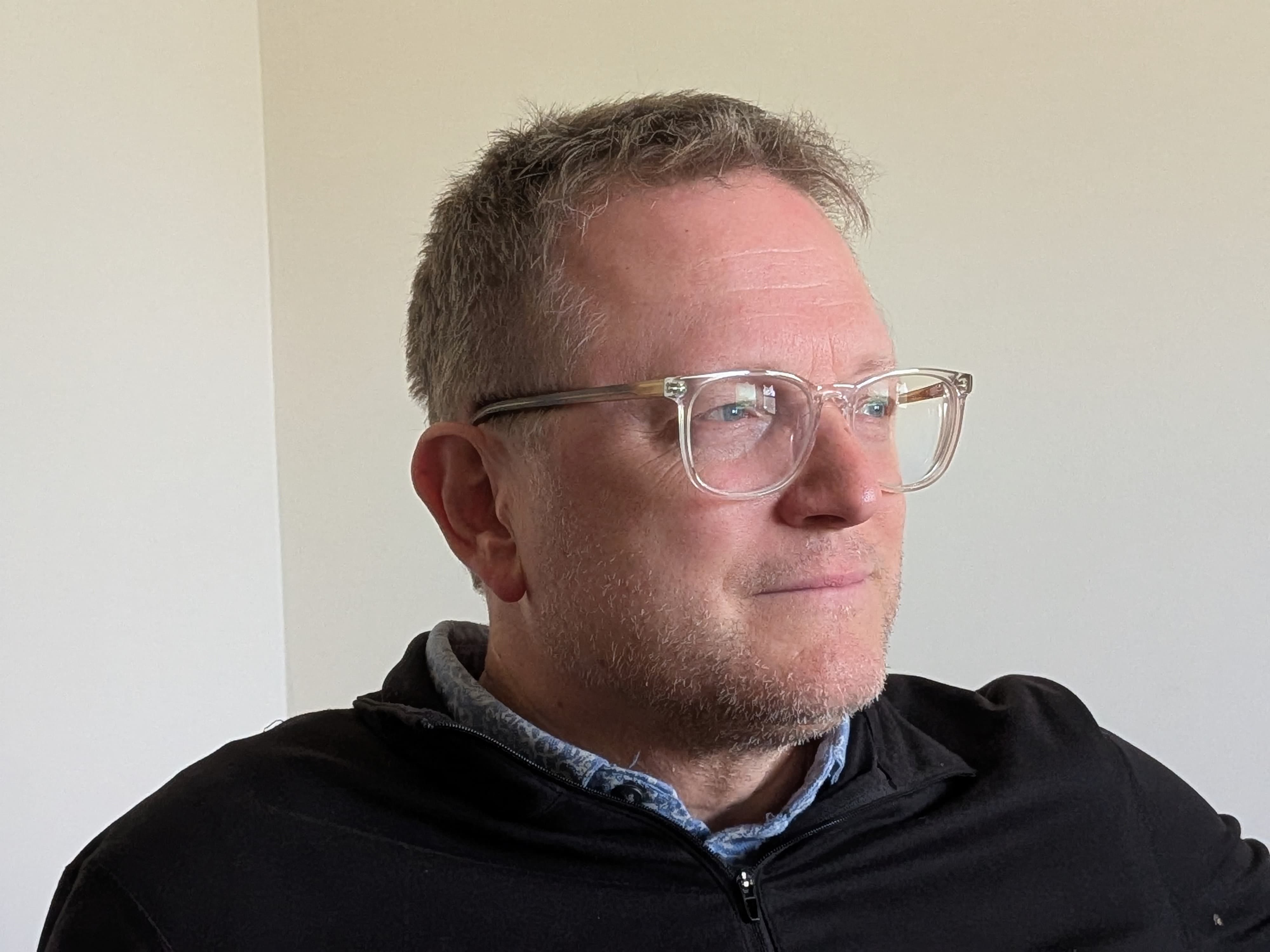
Ted was the 15th newsroom hire at Bloomberg and spent 32 years in the most rigorous newsroom in finance, first as a reporter and editor, and subsequently running the news product team. Then, at 57, he was laid off.
Unsure of what to do next, Ted started writing on LinkedIn. Soon, he had 40,000 followers, and executives were sliding into his DMs asking to steal some of his content magic. Now, he runs a ghostwriting agency helping CEOs and founders tell their stories online — a need, he says, that reflects the fact that social platforms are just as important a forum for communication today as traditional media for leaders.

Good writing has to be memorable. The ingredients for something that sticks are specificity, people, and surprise.
Anecdotes are powerful tools. The best narratives are built around concrete stories that become metaphors for what sets you apart. Ted spends a lot of time with people extracting these stories.
CEO content is where public speaking was 30 years ago. Executives who write online and tell their own stories are setting the standard everyone else will eventually have to meet. Watch what Mark Zuckerberg, Satya Nadella, and Jamie Dimon are doing.
Our conversation, edited for clarity and brevity, below.

What did having both perspectives — running editorial coverage, then building the products that delivered it — teach you about storytelling?
When you’re thinking about storytelling, whether you’re a journalist, a novelist, or writing on social media, the first question has to be: is this memorable?
There are a few things that go into that. The most important, for me, is specificity. Bloomberg was very strong on this. When I first covered markets, you could never say, “It was a big day in the stock market.” You’d say it was the biggest one-day decline in 33 months. In 1990, that wasn’t standard practice in financial journalism, partly because most outlets didn’t have the tools to calculate it. Bloomberg reporters did, and it pushed them toward real precision.
Next, you need action, and you need people. I put a huge emphasis on writing about people. Think about how much you read online that is completely devoid of any human beings.
The last thing is surprise. You want something that makes the reader think: “I didn’t see that coming.”

You talk a lot about the importance of anecdotes. Can you say more about that?
Think about how you understand Elon Musk’s work ethic. You understand it because he used to sleep on the factory floor. That anecdote carries enormous weight. It’s not the same as saying, “He works hard.” It’s a specific, concrete image that tells you something about who he is.
Most people don’t recognize the significance of those moments in their own lives. They don’t see the world the way a writer does. What is a throwaway detail to them is, potentially, the whole story.
That connects to something I think about a lot: the ability to excavate those details and stories from someone. That feels like a skill that LLMs are still bad at.
Absolutely. The natural tendency of an LLM is to summarize and provide an overview. And what it leaves out, almost universally, is everything I want as a writer. It leaves out all the details.
There’s a great example. Josh Kushner, who runs Thrive Capital, told a story about being robbed at gunpoint in Guatemala when he was in college on Patrick O’Shaughnessy’s podcast. They didn’t take his watch because he was wearing a cheap Swatch. Ever since then, he’s worn the same model watch. That evocative detail says something about how a formative experience shapes you for the rest of your life. But that story will not be in the LLM summary of that podcast.
Most people won’t surface those anecdotes on their own, because they don’t realize they’re significant. That’s the role of the writer — helping people find and tell their story by asking the right questions.
As you spent more time thinking about this, you developed a bigger thesis about what’s happening in communications. What is it?
For most of my career — the last 50 years, really — if you wanted to get your message out, you hired a PR firm and tried to get the Wall Street Journal to write about you, or you bought an advertisement. Earned media, paid media. Those were the options.
Legacy media has shrunk and moved behind paywalls. Getting quoted in the Journal still matters, but it’s harder to earn and reaches fewer people. Meanwhile, the demand for visibility kept growing.
At the same moment, distribution became free. Not cheaper: free. You used to pay Edelman to get you into the Journal. Now LinkedIn exists. The cost shifted entirely to content creation. You have to make something worth reading.
This phenomenon is less than 10 years old. And most companies, most CEOs, haven’t fully engaged with it. The people who are already doing it — tech founders, Silicon Valley venture capital, a handful of vocal executives — are very visible. But if you look at how many S&P 500 CEOs are actively creating content as a strategy, it’s almost none. They may have a handle, but they’re not in the game.
My term for this kind of person is a “writing-first practitioner,” someone who uses writing as their edge. But it’s a big ask to tell every CEO they need to become one.
I’d compare it to public speaking. Thirty years ago, CEOs were not regularly up on stages giving speeches. At some point, that became not just acceptable, but beneficial. Then, Steve Jobs made it a competitive advantage. His product demos changed what everyone expected from a CEO on stage. The people who rise to CEO today are disproportionately people who can command a room.
What I see happening now is that people who write and communicate effectively online have a disproportionate advantage, because they control their own narrative. They don’t need Edelman.
I want to be clear: when you give a big speech, you might have a speechwriter, you might get coaching and practice. Writing online is no different. You can have an editor, a communications team. But at the end of the day, your name is on it.
I look at what Satya Nadella and Sundar Pichai have started doing on LinkedIn: handcrafted earnings recaps, written in their voice. These are not reposted press releases. They’re a masterclass in how a CEO should write for that context. Virtually no other CEOs do this.
How do you help the people you work with unlock this writing?
I ask a lot of questions, and they answer them — they tell me stories. Then we rank them. We pull out the strategically risky ones — there are great stories you don’t want to tell publicly — and we write the ones that are both compelling and useful.
I have clients I write for entirely, and I have clients I coach through writing themselves, because they want to develop the skill. For all of them, though, when you go through the process and see results — when someone writes something and gets a meeting, or an investor connection, or meaningful responses from people they respect — that’s what generates momentum. They start to understand why it’s worth doing.
My prediction is that in five to seven years, this is just something everyone does. Right now, most people look at it and think it’s optional. It’s not going to stay optional.
Other than those doing earnings posts you mentioned, what else are you watching as signals that this is becoming the norm?
The earnings call analogy is a good one. When I was a reporter in the nineties, CEOs were almost never on earnings calls because it was considered beneath them. At some point, that changed, and now the CEO not being on an earnings call is a problem. Communications teams put enormous work into preparing them: scripts, practice, message discipline.
I think that’s exactly what’s going to happen with content. If you don’t write, people will notice. If you write badly, that will also reflect on you. The standard is rising.
With video, I’d say the turning point was Mark Zuckerberg — and not the wakeboarding video. He started posting a Reel shot on an iPhone with every new product launch. No CNBC appearance, no press release. Just a Reel.
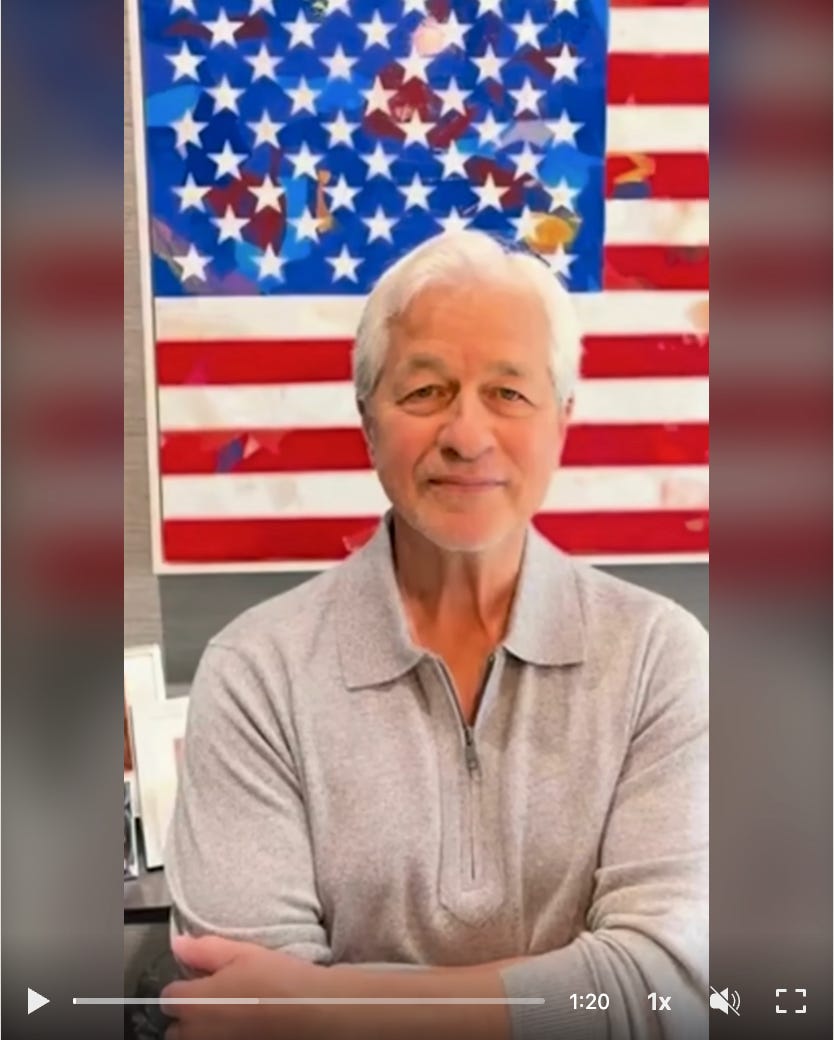
Then Jamie Dimon, who has written his annual letter for 25 years, did a video this year for the first time on LinkedIn. Casual shirt, talking directly to the camera. When Jamie Dimon and Mark Zuckerberg communicate that way, that’s what everyone’s going to do.
But I still see so many companies struggle with being too promotional on channels like LinkedIn.
It’s in their DNA. They can’t help it. And you have to be direct with them: promotional content is dead on arrival on social media. It doesn’t work. There are other channels for that — advertising, earned media — and those work the way they work for a reason. Social is a new channel with different rules.
You’ve talked a lot about LinkedIn, and that’s where you’ve found success, but what about other platforms?
LinkedIn is where I tell clients to start, because that’s where the professional audience is. But I try to be clear that this is not only about LinkedIn. It’s about creating visibility online. That could be X, Substack, Threads, Bluesky, or something that launches next year. The storytelling principles are consistent across all of them: write something memorable, be specific, write about people, and don’t be promotional. A good story is a good story on any platform.
What is changing is the dynamics of each platform, faster than most companies want to deal with. Long-form on X has exploded since January. Substack has added comments, and now it’s a place people actually hang out and have conversations, not just read. You have to stay nimble, and that’s genuinely hard for organizations that want to plan years ahead.
How does AI fit into your workflow as a ghostwriter?
The single biggest thing, honestly, is transcripts. Immediate, accurate transcripts of conversations. Before AI-powered transcription, you were recording on a device and typing everything out. That was brutal.
For ghostwriting specifically, if I’m trying to capture someone’s voice, I can search a transcript corpus for idiosyncratic expressions, phrases, and speech patterns and use those. AI hasn’t replaced writing the story, but it’s remarkable for capturing how someone actually talks. That’s what you want: for the writing to sound like them.
The other application is that if you work with someone extensively and accumulate many transcripts, you can ask questions of that whole body of material. What do they say a lot? What do they believe? What haven’t they talked about yet? You can interrogate the corpus in a way that just wasn’t possible before.

Thank you for reading! If you want more, read Ted’s writing on his LinkedIn and his blog. And if you’re not a subscriber yet, join me:
I advise CEOs on communications from Nairobi and this is something I have been saying for years but the urgency now is different. AI is making every CEO's silence more expensive. If you're not writing, someone else is defining who you are. The CEOs I work with who resist this always have the same reason: "I don't have time." That's the wrong frame. It's not writing time. It's thinking time. The writing is just evidence it happened.
Interesting Read. Appreciate how you have write it down.