



Confession: I’ve been wanting to talk to an archeologist for a while for this newsletter. I’m fascinated by the communications challenge they face: they’ve got to explain to the public why very, very old stuff is important. They’ve also got a huge advantage: they see how humans have told stories since our earliest days. Might one have some ancient tips I could use?
The universe delivered when Portuguese archaeologist and science communicator Sara Cura commented on one of my articles. I reached out, and we had an inspiring, vulnerable discussion about podcasts, politics, and the past. If you think it’s hard explaining B2B SaaS to someone, try explaining deep time…

Fill the space, or someone else will. Rigorous, careful people like scientists tend to be quiet by nature, but if you don’t talk about your discipline, ideologues will fill the silence. Just look at archaeological pseudoscience and the political coopting of history…
Context or die! Whether it’s 400,000-year-old fire or any expert subject, people won’t connect to dates or data if we don’t connect it to their lives.
Remember that technology has always been a duality. The spear fed and the spear killed. We shouldn’t forget this lens when it comes to AI, either.
Our conversation, edited for clarity and brevity, below.
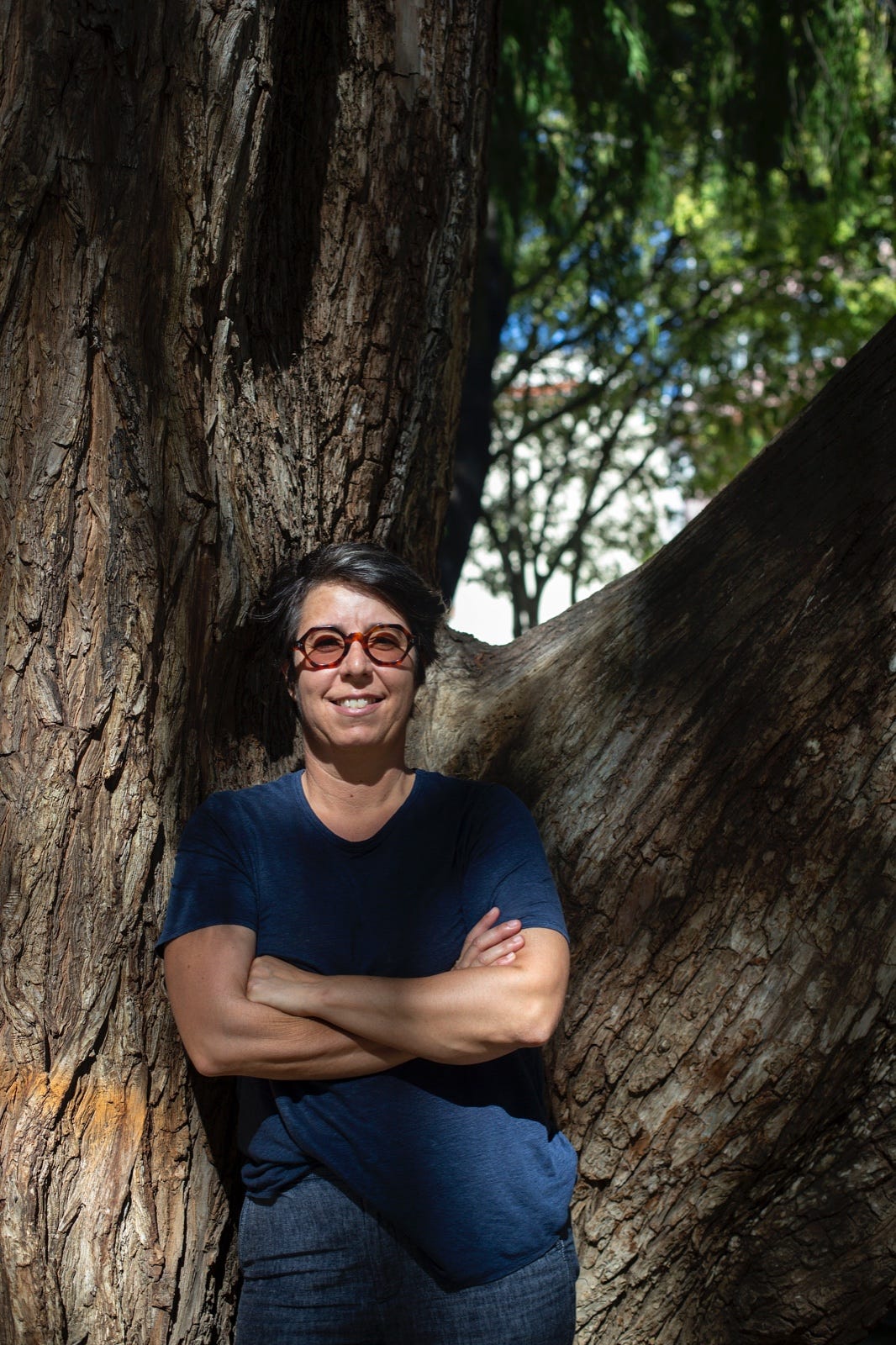

Tell me about your career — how did you get into archaeology and science communications?
In my little village in central Portugal there was an association of amateurs doing research, collecting artifacts, and making small exhibitions. I started as a volunteer around 12 or 13 years old. I loved history, but I also loved going into the field, being close to nature, and getting a profound knowledge of the territory. I realized this was my calling.
When I moved to Lisbon to study, I already had a big advantage over my colleagues, and I already knew what I wanted to study deeply: prehistory. I find deep history and human evolution thrilling. After I finished my studies, including my masters, I had a long career as a researcher, teacher, and working in a museum.
How did you start working in communications?
Our professional lives go side by side with our personal lives — it’s a story of a career, but it’s also a story of a personal history. I had a serious alcohol addiction that nearly destroyed my life. I spent eight months in a recovery center, decided to give up my permanent position and to have nothing to do with archaeology anymore. The profession was mingled with all the pain.
I started working as a science manager in the school of communication, and then went back to university to study science communication. The second I started that masters program, I realized I couldn’t fool myself. I loved science communication, and I loved doing it with archeology.
During my masters, I started a prehistory-themed podcast. I was lucky because they had a studio at school and I could record with the help of a professional team. Two years after starting, my podcast won the award for best science podcast in Portugal.
I tried being an independent freelancer in science communication in archaeology for two years, but I realized there isn’t yet space in Portugal to do this full time. There’s a lack of resources, a lack of money to pay for my services. In the research world, most people don’t think about paying a professional to do it because there is always a lack of funding in projects. Some do value the relevance, but don’t have budget.
Nevertheless even with a very small budget I got a couple paid collaborations going on. This will change in the future. Now I do this as a side job, including the podcast, and I am starting a permanent position as a science manager again.
How is archaeological communication and science communication different from communication in other disciplines?
No matter if it’s physics or archeology, we’re trying to tell people stories about our work, make it relevant to their lives, and get support for our work. Also, we want to give tools to people.
In the archeology I do, we don’t have written texts. We have objects. We excavate these objects, analyze them, interpret them, and then try to tell a story about them. We have to have a lot of imagination, but we also have constraints: what does our data allow us to say?
That creates an interesting tension. We have to tell engaging stories because people will absorb content if it resonates with their emotions. But we also have to stick to rationality, what the data allows us to say. In a polarized world, where people overreact and react on their most basic emotions, this rationality can be a good thing.
“We have to tell engaging stories because people will absorb content if it resonates with their emotions. But we also have to stick to rationality, what the data allows us to say.”
What about the challenges that you face in communications?
For me, working on prehistory, one of the biggest challenges is communicating deep time. It’s very difficult for a lay audience to grasp what one million years, two million years is. People usually can only imagine as far as the Pharaohs, roughly 5,000 or 6,000 years ago.
It’s a challenge we share with paleontology. Although for paleontology, Hollywood is a big help. Dinosaurs are in people’s minds, so they are less difficult to grasp.
How can you help people understand timescales that are totally beyond us?
Don’t just give a date, a number, but make it relevant for the present and the future. That’s one of the things archeology sometimes fails at: our communication stays in the past.
Let’s talk about the example of humans and fire, hundreds of thousands of years ago. How would you explain to me why this story is important today?
We’re pretty sure people were making fire around 400,000 years ago. I’d start like this: fire is responsible for the body you have now. Because if you have fire, you start cooking food, and if you start cooking food, it’s easier to digest and it feeds your brain’s high energy demands. So your gut gets smaller, and your jaws get smaller, and your brain develops more. It has a direct connection to you today.
And then I’d say it shaped the way we engage with each other. Fire gave us extra hours of light at the end of the day, where you couldn’t do much more than talk. We started having language, then we developed narrative, and then storytelling and fiction. We came up with myths in prehistory. When we were painting all those wonderful caves in France and making art, we already had important fictions and myths.
What was the importance of those stories and myths?
They do one very basic thing that we still absolutely need today: deal with uncertainty. We are vulnerable beings. All biology is conservative, but human beings are conservative in the sense that we always seek comfort and security. Myth and religion help us deal with the things we can’t explain and find some comfort. We’re still the same.
What else can archaeology help us understand about ourselves today?
If you look deep into our history — into human evolution, and also into historic times — using the methods of archeology, we very soon realize that we are all a beautiful, wonderful mix.
There’s no such thing as race. There’s no such thing as a pure, original nation. In the deep past, different species of humans were interbreeding. It shows you that racism is absolutely bogus.
But the past is always manipulated by political systems. The Portuguese dictatorship constructed a mythical past for the Portuguese that never existed, based on archeological finds and historical buildings. Nazism created a fictional Aryan race, and they went as far back as prehistory to prove it.
Political appropriations of the work we do is one of the reasons we should engage much more in communication. If we don’t fill the space with the rigor and seriousness of our work, other people will fill it and say all kinds of crazy things.
“Political appropriations of the work we do is one of the reasons we should engage much more in communication. If we don’t fill the space with the rigor and seriousness of our work, other people will fill it.”
How do we push back against that kind of ideology, especially now that we see so much pushback against scientific ideas?
The best way to deal is just to talk. Go to social media and tell your truth. Engage more, because people want to hear from archeologists — they love archeology.
People have misconceptions about our field — that we excavate dinosaurs, that we work like Indiana Jones, the caveman — but these misconceptions are doors. Behind the misconception lies an interest. You can engage with that interest and say, “Here’s the way it really works.”
To fight these ideologies, we have to be more present. If we don’t occupy the space we still have, they will occupy it. But it’s a lot of work, because, for one thing, we’re sometimes not technically prepared to do this communication work. We’re often more rigorous, more discreet, so being loud is not really our nature. But staying silent is not the best solution.
“People have misconceptions about our field — that we excavate dinosaurs, that we work like Indiana Jones, the caveman — but these misconceptions are doors. Behind the misconception lies an interest. You can engage with that interest.”
I see so many people around me who are smart — serious researchers, serious professionals — and they’re also timid about speaking or writing in public. You’re so right: the loud voices are often the voices of ideologues. They get heard.
Someone will fill the space. At university researchers should learn basic communication techniques, and we have to have professional support. That’s where the role of the science communicator comes in — a kind of broker who prepares, helps, and supports the scientists.
Scientists are doing very important, serious work, and then they tell their story online and get attacked. I understand why people don’t want to do that. But you can learn how to deal with it and to communicate in a way that you’re not so exposed to those attacks. And remember that communication is not only about social media — you can reach people in different ways, sometimes more transformational and profound ways.
How can someone start?
Start with a sentence — the essential message, the one sentence that says it all. Then you go from that sentence all the way to more complicated things.
And it’s not only to communicate with lay audiences. We all need to know a bit of communication to succeed among peers. You go to congresses and hear about important science, and the talk is so boring, because it’s not crafted in a way that’s clear, understandable, and objective. These are basic skills that are useful in every part of the work.
I want to come back to technology. AI is a huge debate today, and you said that you have limits to think the technology should be used for, while also being an adopter. What can the past teach us about technology?
I think human evolution is the most fascinating story there is to tell, because it’s a tale of survival. We survived because we came up with tools, with technology, but also because we were very socially developed — our social bonds were very strong. An original combination of technology and care.
It’s always a duality. You come up with a spear, the spear hunts the animal and you feed the group, but the spear can also kill another human being. So it’s about human choices. I do believe there are many dangers in technology nowadays — this is not new — but the overall thing is still very much motivated by care.
That’s a fundamental insight.
You have people coming up with technologies for warfare, of course, I’m not going to deny that. But there’s such a big quantity of scientists and scholars who come up with technology to find solutions for health problems, for climate change, to increase food security, to help with mobility and so forth and sometimes we don’t talk about that so much. We tend to focus more on the negative, the disruptive and dangerous. But the story of the human species is a story of care, of protecting each other. We can be violent, but ultimately we need each other to survive.
“We tend to focus more on the negative, the disruptive and dangerous. But the story of the human species is a story of care, of protecting each other.”
Is there a place in your own work where you feel that tension — where the tool starts to cost us something?
Visual elements are absolutely crucial in archeology, and the work of illustrators goes hand in hand with our work. Imagine someone looking at ruins — they can’t make the reconstruction in their own minds.
I’m an early adopter of AI, but I am completely against illustrations made by AI in archaeology. It breaks my heart to see colleagues asking ChatGPT to do it rather than a real illustrator. It’s a fascinating process: the scientist says, “How can you make a drawing of this?” They work to create a reconstruction beyond what the data can tell you, but still within the limits. It’s incredible.

Sara’s recommendations for prehistoric sites in Portugal
Côa Valley rock engravings. “They were discovered in the late 90s and were supposed to be submerged by the construction of a dam. It mobilized the whole Portuguese society, and we saved them. There’s a beautiful museum now where you can learn the whole history of the engravings of the hunter-gatherers. It’s absolutely marvelous.”
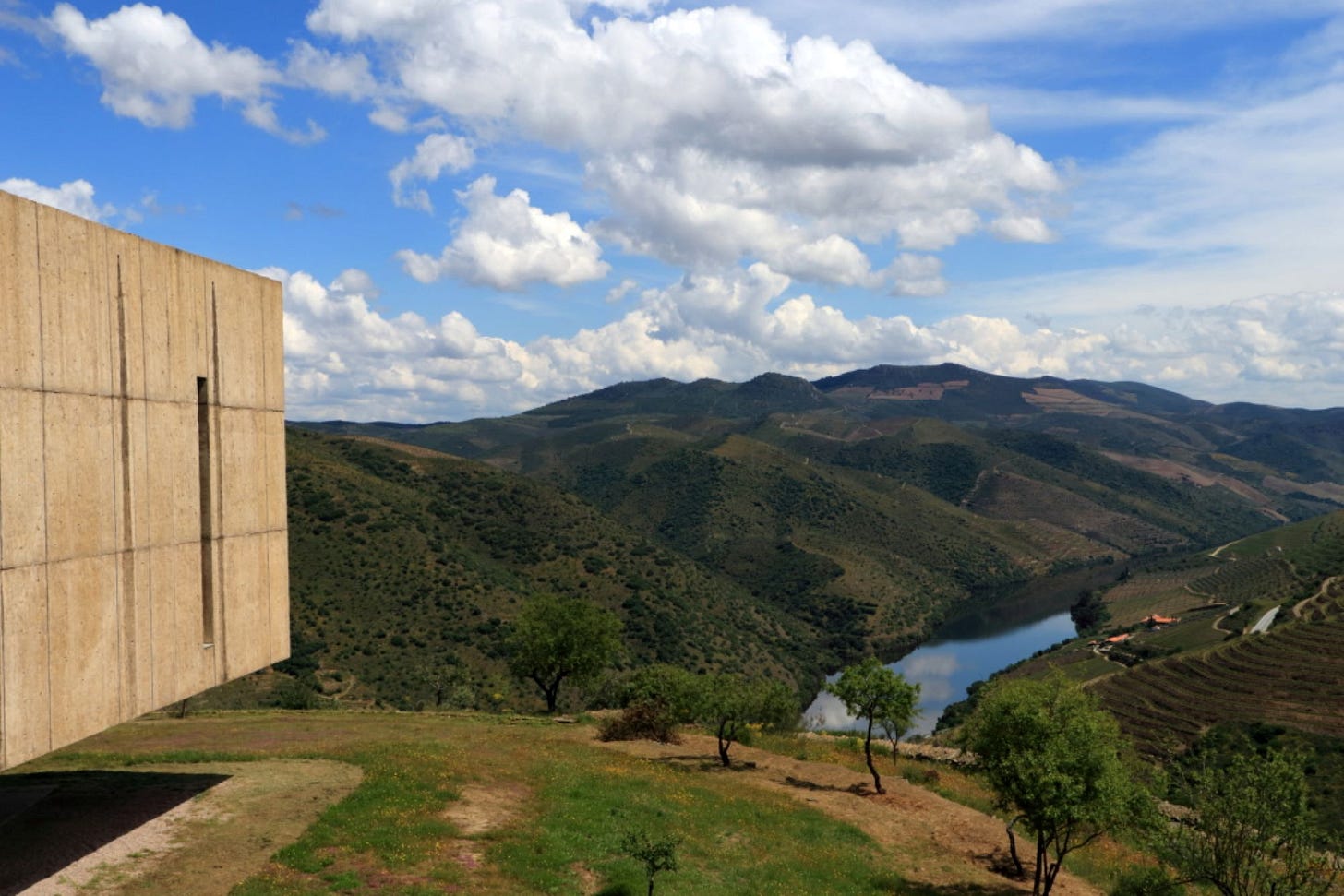
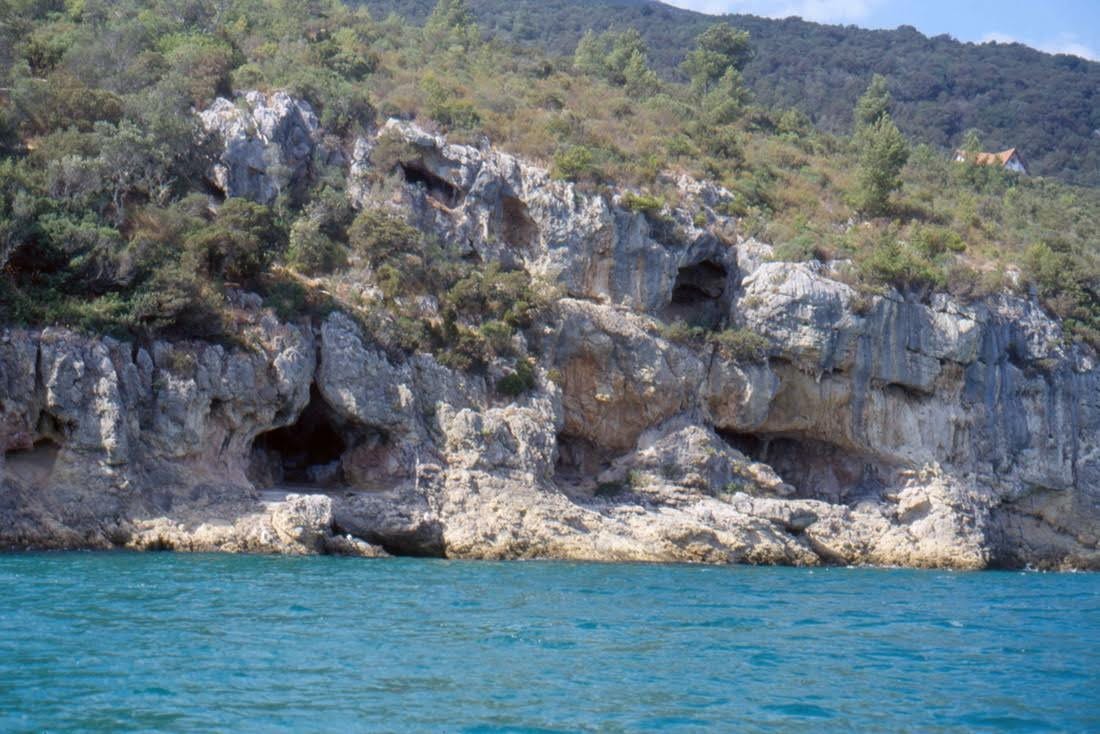
Côa Museum (Credit: Côa Museum) Gruta da Figueira Brava. “This cave in front of the sea tells a beautiful story. We have this idea that Neanderthals were big meat eaters, but this cave shows that human species and Neanderthals, when they were in a territory where fish was widely available, were fishing too. It challenges the idea that fish consumption was very specific to our own species — that Neanderthals didn’t have the resources to capture this kind of food, and that this food, specifically the fatty acids in fish, was important for our higher intelligence.”
Further learning, reading, and listening
For more of a discussion about technology and care, Sara recommends UK philosopher Tom Chatfield’s Wise Animals
See you next week! If you’re not signed up yet, subscribe below.