



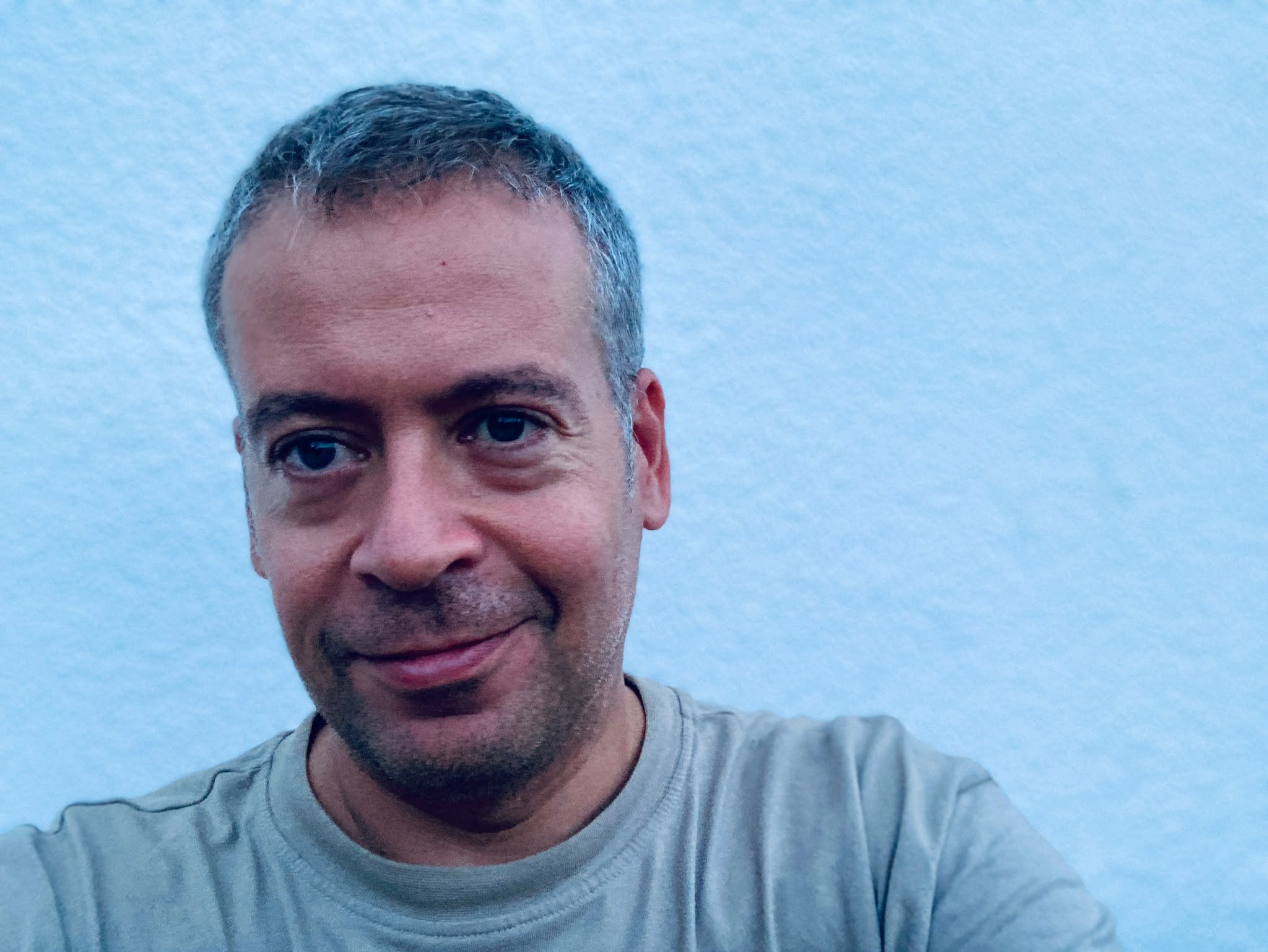
I’ve worked in journalism since my 20s, but ask me to name my favorite journalists, and my mind often goes blank. Ask me for just one, though, and I’ll say Kaya Genç. Whatever the Turkish author and cultural critic turns his pen to, his graceful prose draws me into worlds far from my own and makes me care about the people in them.
We met up last month for coffee in Istanbul. Given the focus of this newsletter, I wanted to know how technology is impacting his role as writer and teacher; he is currently lecturing on Victorian literature at Boğaziçi University. After years of reporting on Turkey’s political situation, he found himself turning to John Ruskin, William Morris and Oscar Wilde — writers who rebelled against an ugly, conformist age by pursuing beauty. His students, facing an uncertain future shaped by AI, are finding inspiration there too.
We talked about the joys of old iPods, funding a rebellious life, and one of his favorite cafés.
Below is our conversation, edited for clarity and length.

Tell me how your students are reacting to the current moment, with the rise of AI.
There’s this big concern about what they’ll do after college — how will they serve the community, how will they make money? They want to be good writers. They want to have their own minds. They want to be able to think on their feet. But all the technology that surrounds them is telling them not to: you don’t have to be creative, you don’t have to write essays.
So they are looking for inspiration in the writers I teach, people like John Ruskin, William Morris, Dante Gabriel Rossetti and Oscar Wilde. These writers were outcasts, people who reinvented themselves in an ugly age through art. They could easily have been assimilated, civilized Victorians, but they went against the grain. They looked to French and German philosophers and artists for other ideas.
Can young people afford to go against the grain today?
I think clever people want to be rebels. They don’t want to graduate and disappear.
The war against globalist thinkers and foundations is really having an effect. For my reporting, I interviewed some translation studies majors and young scholars who are training AI models because they want to earn foreign currency. In the past, maybe you could make money from a company abroad that had much more progressive values and ideas. Now you’re stuck with these Silicon Valley barons.
That’s depressing, because you want the best of both worlds: to make money and to be a rebel. That was possible when I was growing up. You could be rewarded for being nonconforming, and someone abroad would support you. It was almost like being a Charles Dickens character.
Like having a patron.
Yes. You come close to poverty, and then someone throws you some money and says, “Yes, keep going.” Now that’s drying up, with all the isolationist policies of governments and the criminalizing of funding from abroad.
But I think this will inspire people to work in collaboration, to form collectives. John Ruskin founded a guild and got his students working with their hands and fixing problems in their lives, which would also be useful for the people around them. That’s a good code. We could come together and say, “Let’s fix the traffic noise problem together; let’s put up some signage saying that honking is bad for the environment.”
I asked students to come up with ideas like that, because if you feel useless, you don’t come up with useful ideas. And this current moment, I think, makes us feel useless, because all the answers are one prompt away.
If you feel useless, you don’t come up with useful ideas. And this current moment, I think, makes us feel useless, because all the answers are one prompt away.
How do you feel useful?
It’s about looking — and not only looking at your phone. I had a friend who said, “You’re always walking around with your headphones on. You really are not hearing what people are talking about.” That’s true. If you go to the gym and hear people talking about their troubles with the currency, joblessness, and whatnot, you learn something about society. We have to train ourselves, because all the stuff that we own is trying to cut us off.
When we look at the Victorians, with their corsets and their dresses, we think, “Oh, they’re so constrained.” But we are more constrained than they were. They could at least hear and see.
When we look at the Victorians, with their corsets and their dresses, we think, “Oh, they’re so constrained.” But we are more constrained than they were. They could at least hear and see.
Do you always teach this course about 19th-century literature?
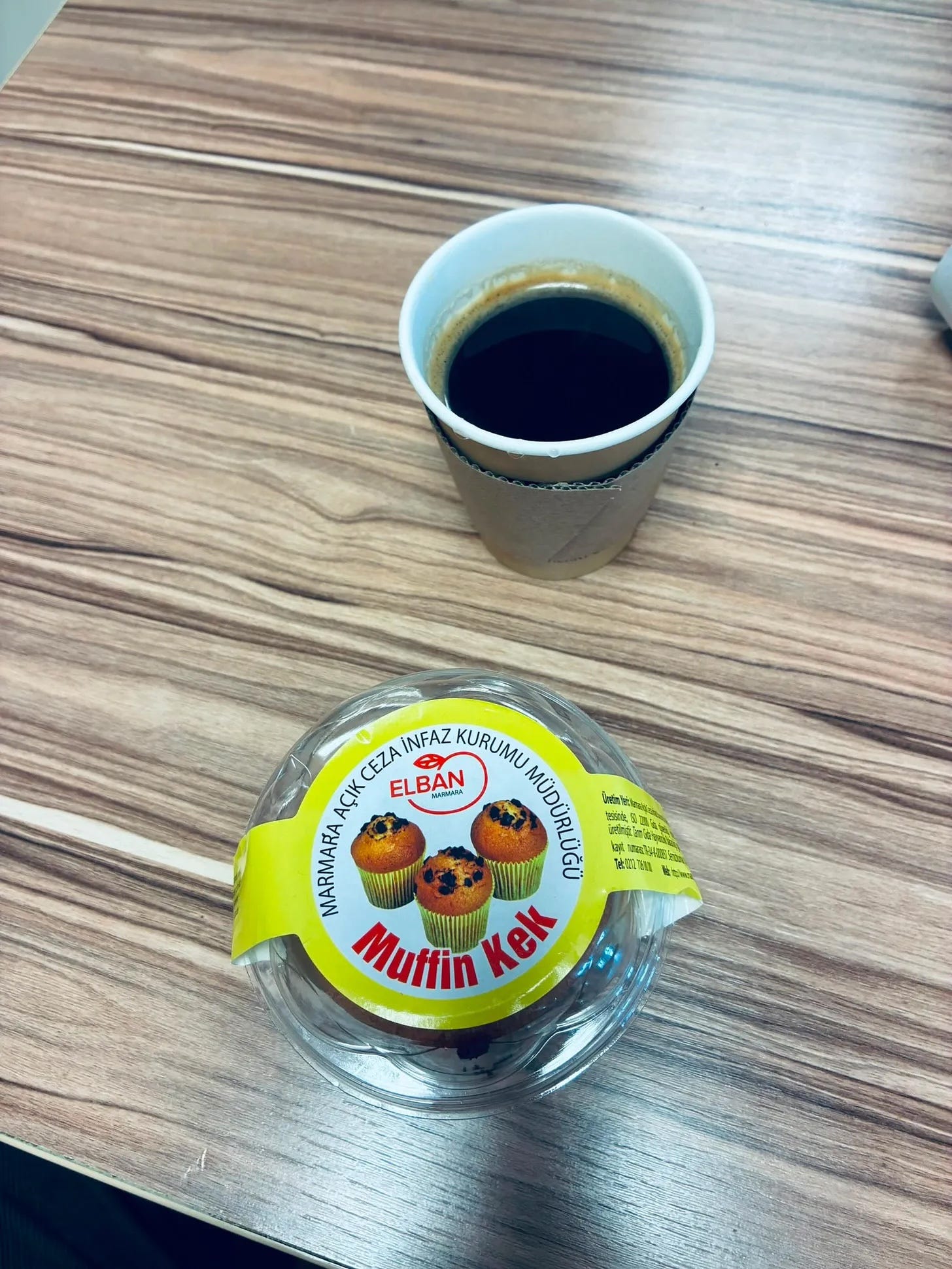
It was the first time, because I was so depressed as a reporter. I was reporting on the political situation in Turkey, and I went to the court cases. I went to Silivri [where jailed Istanbul mayor Ekrem İmamoğlu is being held].
In your article about the prison, I was so struck with that detail about the muffin that was served there and handmade by the prisoners.
People might read the article, but they were afraid to share it. This fear was really depressing. You elect a mayor, and then someone throws the mayor into jail, and then you’re like, “Okay.”
So can the academic world, the world of teaching, be an escape?
I felt that literature could be an escape, because in college you have all these ideas and youth and passion around you. To return to that would be a kind of answer. And we are lucky here: the university I teach at is a public university, and they don’t have budget problems.
You started out in the private sector, though, right?
Yes, like you, I relied on private capital. I started working at age 16 for the internet company Superonline. I was editing their website and writing code for them. I was excited about private capital, the internet, the future, and innovation because I saw the internet as the answer to censorship. It would create job opportunities for people like me to publish interesting stuff. Now, the web has been throttled by AI. Websites are disappearing, and the promise of technology and the internet is in the rearview mirror.
Returning to the Victorians inspired me. The Victorians, in turn, were inspired by medieval writers. It’s a cycle: when we come to the edge of something new and feel suffocated, we look back a few centuries and find some inspiration there. Some people make fun of you, but then it turns into a craze, and it really transforms society. Look at the New Yorker writer who wrote that book on minimalism —
Cal Newport.
His main point is that capitalism looks for something very rare, and on social media you’re just like everyone else. So you have to do something that’s really rare, and this technology pushes you to do the opposite.
That goes back to what you were saying about rebels. I think being a rebel, in some sense, is also being a rare person, right? Do you think it’s harder to be a rebel now?
No. Society is always asking us to be rebels — like Steve Jobs. But I think “rebel” is interpreted in a strange way. I’m sure Elon Musk thinks he’s a rebel.
I’m very sure that he does.
But when you look at people like John Ruskin or Oscar Wilde, you find something very different. They came from privileged backgrounds, and at one point they said, “I want to do something useful for society, and I want to pursue beauty.” Truth, beauty, justice — these things can still inspire people.
No entrepreneur says, “I want to make a beautiful business.” They say, “I want to make a profitable business.” I wonder what a beautiful business would look like. It would probably be profitable, but it might have other qualities, too.
My friend who designed the cover of my novel told me that OpenAI works with the best design studio in Europe. They know what good design is, and OpenAI is buying all this great tradition to design the interface and website. I think the biggest stress is that people with deep knowledge about beauty have no other buyers than these big companies. They feel like they have to sell that knowledge in order to survive.
People with deep knowledge about beauty have no other buyers than these big companies. They feel like they have to sell that knowledge in order to survive.
This comes back to something I’ve been thinking about a lot recently. In the late 19th and early 20th centuries, in the United States at least, there was a really big culture of philanthropy — very rich people funding museums, being the kind of patron you talked about before. I don’t see that tradition among this new generation of very rich people. They’re not interested in helping people create beautiful things with no strings attached.
The old-school collectors understood that supporting artists was good for them as well. The rich today don’t think about it. They don’t think long term.
On Substack, I think people remember the beauty of receiving a long, thoughtful email — and of producing bulletins.
In primary school, my first publication was a photocopied weekly magazine. I was cutting and pasting and photocopying. This was something that defined me. I still remember where I did it, how I distributed it, and how much power it gave me. I became the student leader in the class because I was the publisher. I wrote a column for it, too.
What was it called?
I don’t remember. But there was a column called the Shadow Man, and it was kind of like a gossip column about which student was in trouble with the teacher.
Do you think we’ll go back to making things like this?
I think more and more we will have less technological ways of reinventing ourselves, and perhaps of supporting each other — as you say, philanthropy. Maybe the middle classes will be the philanthropists of our age, supporting each other on platforms and sending each other money for our good deeds.
Maybe people will live around like-minded people, support each other, and form neighborhoods and communities in real life, more and more.
Whenever I go to Karaköy [a neighborhood in Istanbul], for example, I could go to [the shopping complex] Galataport. It’s easy to go, and so useful. But I always say, “No, I’ll go to Cafe da Giovanni,” near Galatasaray Square. Maybe it’s slightly more expensive, and smaller, and maybe the Wi-Fi is no good. But I feel good.
Kant has the categorical imperative: every act of yours should be something you could will as a universal law.
I love that.
Go to the local coffee shop, support it. You know that you’re doing a good thing — a moral thing. That’s why it survives. And you know that going somewhere else might be better for your bank account, but then you’re contributing to an economy that’s not good for you in the long term.
You’re such a beautiful writer. What is your process? When do you write?
I do very long drafts. I’m writing a piece on Gertrude Stein. I’d never read her before, so I spent my summer reading her work. She’s an amazing character — an art collector like you — who lived several lives. I produce something like a 50,000-word draft, but it’s all quotations. I highlight passages on my Kindle and put them there, so it becomes a huge archive. Then I shorten it, and now it’s 2,000 words.
It takes a long time, and you shouldn’t send something before it’s ready. The deadline for this piece was 1 October, so I started much earlier.
I’m also trying to write by hand more, in a journal. At one point I realized I'm going to die, and one day someone might read my diaries, the way we read Gertrude Stein’s letters. So I decided to be intentional about it and write beautifully.
I’ve also started buying albums. I found my old iPod, which has 60 gigabytes, and the iTunes Store is still open. I imagine my lira going to Bill Frisell or whichever artist I’m supporting. I feel I’m doing something good, both for the thing I’m supporting and for myself. And it’s good to only have 15 albums.
Is yours the one with the white front and metal back? When I was 16 and went to study in Paris, my dad gave me his, preloaded with a bunch of great music. I remember walking through Paris listening to John Coltrane for the first time, and loving that I had this defined amount of music on the device.
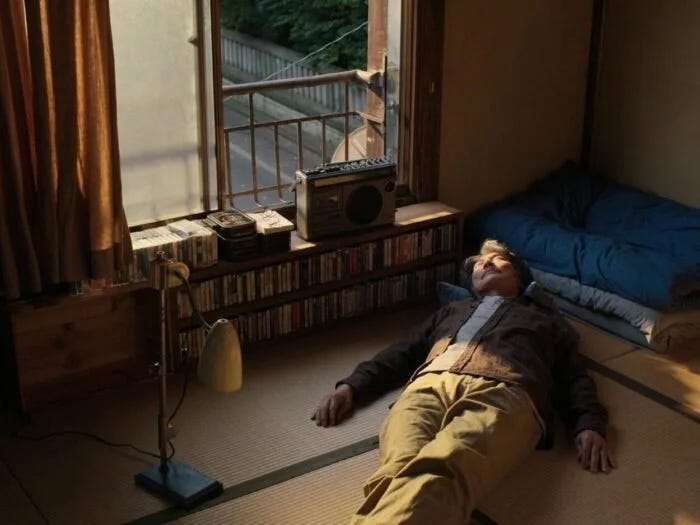
Yes, that’s why that film Perfect Days was so popular. [The main character] has only a small collection of cassettes.
It’s like Gertrude Stein, who writes that she discovers that English literature is her thing. Literature is so big that you can’t wrap your head around it, and then she discovers English literature, and that gives her so much comfort. I think we have the same thing. We have to narrow down. I have no fear of missing out, and I’m okay with spending my time on this activity, on this person.
We are being bombarded all the time by these narratives from the US, from Silicon Valley. What do you think the world can learn from Turkey? Is there something?
We have the concept of keyif: really enjoying the moment, enjoying life. Take Turkish coffee — when you drink an Americano, it’s about productivity. You’re going to spend an hour writing and drinking your drink. But with Turkish coffee, it’s five minutes; there’s a conversation with someone. That’s keyif.

If you’ve been inspired by my conversation with Kaya, here are a few of my favorite recent pieces by him:
“The Hologram Candidate”: Ekrem İmamoğlu, the jailed mayor of Istanbul and President Recep Tayyip Erdoğan’s greatest potential rival, has been held in a mega-prison complex since March 2025. Kaya reports from his trial for The Dial.
“Desperate for work, translators train the AI that’s putting them out of work”: Turkish translators are training artificial intelligence models, even as this very technology is causing their profession to shrink. A strange time we live in.
“Sex, Liberation, and Obsession in 1970s Istanbul”: Unifying cultural moments feel rare these days, but when Netflix released its adaptation of Orhan Pamuk’s The Museum of Innocence in February, it had Turkey in a chokehold. Kaya explores how the series captures snapshots of Turkish history as it changed from the 1970s. “In a sense, Turkey today is a country of Kemals,” he writes about the show’s protagonist. “Obsessive individualists easily diverted from collective action by their private fixations. And yet the sexually liberated, politically daring 1970s endure as a reminder that other, collectivist ways of living together once seemed possible—and might be again.”
If you’re in London on Oct 29th, join me and Alys Key for an Oxford-style debate about whether or not AI is making us less creative at the Granola offices. The speakers include an engineer who worked on Google’s Arts & Culture initiative, an Oxford PhD, and an editor from The Economist. Register here.