


Welcome to Elea.notes, a newsletter about tech, writing and creativity. Sign up if you haven’t.
UK graduates are facing the toughest job market since 2018. Desperate US job seekers are applying to flag traffic in the hot sun.
AI has taken a lot of the blame for the tough jobs market as tools like ChatGPT have turned job applications into a volume game. The number of applications on LinkedIn has risen 45% on year—or a shocking 11,000 applications per minute. 42% of respondents to a recent survey blamed AI directly for their loss of trust in hiring.
As usual, I went looking for the writing angle…and found Kathryn Hall. She is a board member of the British Association of CV Writers—an organisation that tests and certifies writers of the document we all hate updating—and a career coach and CV writer herself. Kathryn has spent three decades in HR and retail management and set up her own coaching business in 2019. Since then, she’s reviewed hundreds of CVs.
The Takeaway:
We’d like to blame our applications disappearing into the void on some AI conspiracy—bots scanning our CVs and spitting them back out. But “there is no bot,” Kathryn says. We’re still writing for humans.
This matters beyond CVs. Slop is everywhere. But the end reader—whether it’s a recruiter, a client, or your newsletter subscriber—can tell when something was written for them versus at them. Clarity, specificity, and a voice that sounds like you put you at the top of the pile.

One of the questions that keeps coming up from my readers is: What about writing CVs? Despite all the tech in the world, this document endures. This is how I came to the BACVW and to you. How did you start your business after many years in HR?
When I had my little boy, I decided to take a career break because I didn’t want to put him into nursery full-time. My husband is self-employed too, so it would have meant juggling childcare from Sunday night to Saturday morning. But when he was about three, I wanted to go back to work, but not full-time employment.
A couple of people I knew were looking for roles. I thought, “Let’s try the CV thing.” I helped them, they got jobs, and I thought, “Maybe I could do this.” That was how the business started. I haven’t looked back since.
How are you seeing AI impact your job, CVs, and LinkedIn?
I am starting to see CVs coming through that are AI-created, and I can spot them from a mile away: the sentence formation, the use of obvious words like “spearheaded” and “championed.” They’re bland. They don’t tell the story.
That said, there’s no reason why you can’t use AI to help form a sentence. But you’ve got to make sure it’s got your stance.
Sometimes clients have forgotten what they’ve done, and they’ve never put it into their CV. We’re talking through things, and they go, “Oh, actually, I’ve got this example.” AI can’t catch that.
Why do you think the CV format has been so lasting, even with the rise of LinkedIn and digital technology?
It gives that snapshot, that initial overview to help recruiters—whether internal or agency—get an understanding. That’s why it’s been lasting.
I say to clients: it’s not about putting everything into your document. It’s about making sure what’s in there is the right level.
That first page is that golden nugget. The personal profile is the elevator pitch that says: who are you? What value can you bring to my business? It draws the recruiter to look at the next section, key skills, in which I recommend you should include an example of where you’ve demonstrated competence. This particularly helps if you have relevant experience, but it was more than 10 years ago.
By doing that, you’ve said on the first two-thirds of the first page: this is me, this is what I’ve done, and this is what I can deliver for this particular role. It’s about how you can jump out of the pile when they’ve potentially got 100-plus applications.
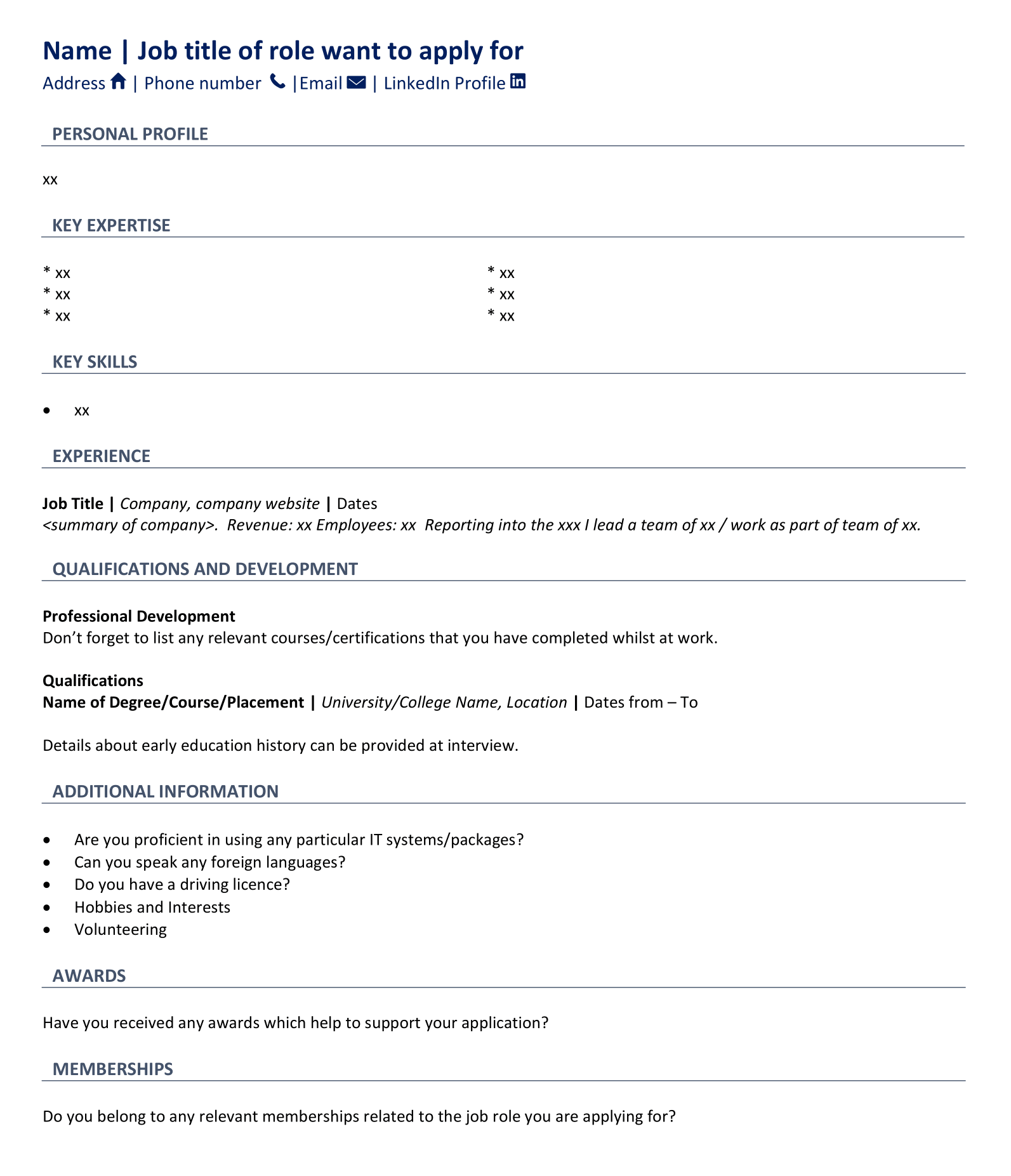
That’s so true. At the business school, I remember thinking: how can this top school be telling us to use this really boring CV format? [Note: Download INSEAD’s template here.] But it was exactly as you said—elevator pitch at the top, then relevant experience. They also pushed us to find a metric to quantify every accomplishment we had.
Most people don’t like selling themselves. I’m not suggesting being big and boastful—that’s not most people. But by using metrics, you can show the value you’ve added. Think about it in terms of “so what”, how have you made a difference? That’s where my career coaching comes in as well to help people arrive at those metrics.
Someone could set a career coach-esque tool in ChatGPT to get to some of those details, then feed that into your CV. But I wonder if it would catch if people are selling themselves short or what they’ve forgotten, as you’ve said.
I always recommend that people regularly track their achievements. You can do it on the Notes app on your phone, a Word document, in Excel, or in a journal.
It also helps you in your performance reviews at work. When you’re asked, “What have you delivered?”, you’ve got the examples. You can also use it to create a reflection post on LinkedIn for what you’ve done in the past month.
It’s cross-purposing it, rather than seeing your CV as one thing and internal processes as a different thing.
“I always recommend that people regularly track their achievements…on the Notes app on your phone, a Word document, in Excel, or in a journal. It also helps you in your performance reviews at work…You can also use it to create a reflection post on LinkedIn for what you’ve done in the past month.”
What’s your most controversial opinion about CVs?
There’s this whole thing about putting stuff in white font behind text because it will get picked up by a system—that doesn’t work. The majority of applicant tracking systems in the UK are used purely as what I call a ‘locker.’ When you apply for a role, it creates a little record for you with your CV so the recruiting manager can look at it.
That’s what the systems were when I was in HR, and they still are. They don’t scan your CV. There’s no bot that reads it. When you create your CV, it’s about creating it for a human.
“There’s no bot that reads [your CV]. When you create your CV, it’s about creating it for a human.”
Why is LinkedIn also important, alongside the CV?
Since COVID and cost-of-living pressures, a lot of organisations and their internal recruiters would rather do their own search on LinkedIn Recruiter rather than going to an agency that could charge up to 40% in fees. So it’s important to have a fully completed profile.
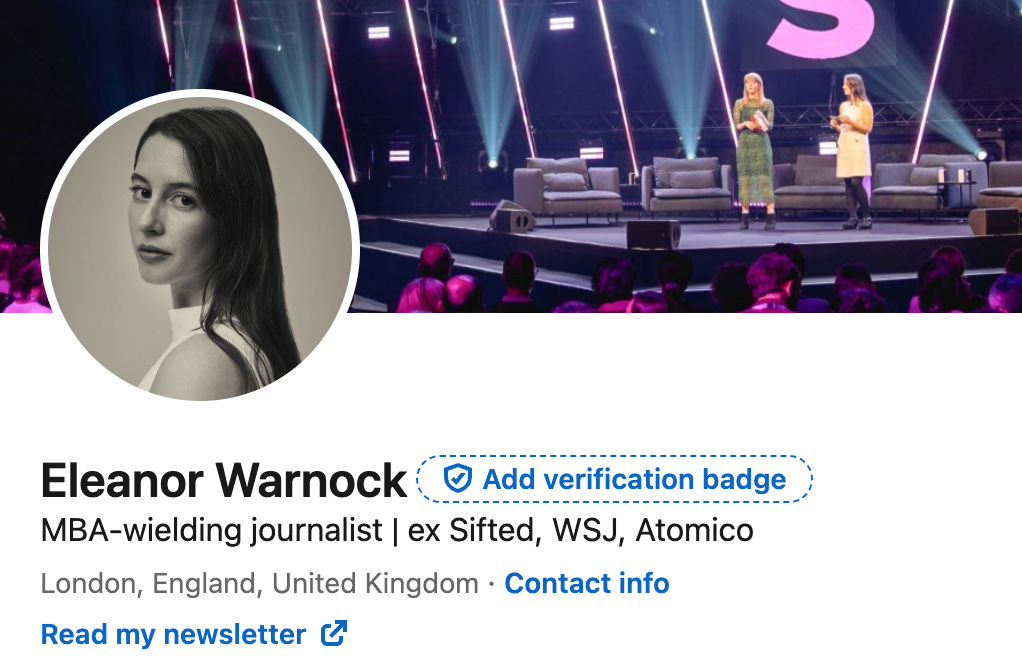
When you set up your profile, LinkedIn will just pull your job title and current company as your headline. That doesn’t add any value. You’ve got 220 characters for your headline, where you can show added value. The About section is another elevator pitch that helps put you in context.
What do you think about the future for CV writers?
I think people want help from CV writers because they realize the recruitment market is complicated. If you’re not sure about your finances, you go to an accountant. If your printer’s broken, you see an IT specialist. If you don’t know how to put all your experience onto paper, you talk to someone who can help unpick it and find those golden nuggets that really help say who this individual is and what value they can bring.
Often, the job is not just about creating the document; it’s about giving confidence back to somebody. You flip the little imposter gremlin. I tell clients: you haven’t got an imposter gremlin now; you’ve got Kathryn on your shoulder with little pom-poms, cheerleading away.
Why do you think recruiting is so complicated right now?
You see all the negative narratives across social media, but it’s hard to pinpoint one thing. Recruiters have a hard job, especially external recruiters—they’re often stuck between the candidate and the business. If they’re not getting feedback from the business, it’s difficult to give candidates feedback.
I talked to a recruiter a couple of weeks ago who said, “We had 100 people for one role, and 75 of them weren’t suitable because they didn’t have the experience, right to work, or qualifications.” That’s where CVs can get missed.
You can find jobs on all the major platforms, from Indeed to LinkedIn Jobs, but always apply directly from the company page, then follow up the next day. By phoning up to say, “Can I check you’ve received my CV? When’s the closing date?”—and then following up after the closing date, you’re pushing yourself a bit more above the rest. You’re showing that you’re keen. Also, you own your data.
Any final thoughts on AI and CVs?
AI isn’t going to go away. When I first started in HR, we didn’t have systems. If we wanted to advertise a role, we had to create it and fax it to the local newspapers before a certain time on a certain day to get it into that week’s edition.
Systems have evolved. AI is just another system that’s going to do things differently. It’s about how you adapt to it—not seeing it as this big white elephant in the room. It’s about how you can embrace it without feeling like it’s going to take over your life.
CVs and career documents are about you. There’s a limit to how much that tool can help because it doesn’t have insight into you. If you use a CV writer, they will ask you the right questions to get this information there.
“CVs and career documents are about you. There’s a limit to how much [AI] can help because it doesn’t have insight into you.”
That personal experience still can’t be copied by a machine.
Your pathway is your pathway. You want it to be different from somebody else. Even if you’ve got similar job titles, you’re going to have different upbringings, different education, different experiences at work, different projects. It’s about pulling all of that lovely stuff into your document to say: this is what value I can bring to a business. And having that confidence to shout about it—in an honest, ethical way, so that you feel comfortable with what’s out there.
📚 Reading this week
Hiring platform CEO says talent acquisition is in an ‘AI doom loop’
Pinterest is calling glamoretti, poetcore and scent stacking as trends for 2026
Important piece from former Eleanot.es interviewee suhairk about how “shame—one of the deepest and most embodied human emotions—cannot be read or encoded by machines.”
If you haven’t read that New Yorker piece about AI writing this week, you should.
🇺🇸 Will be in New York City from next week! Next week’s edition will include my takeaways and reflections from the year. Also putting on my end of year to-do after my chat with Kathryn…update my LinkedIn!
If you aren’t yet signed up, subscribe below.