



Every few weeks, I will be mixing up my regular interviews with some personal thoughts of my own. This week’s I’m sharing two musings: one about learning to love the blank page, the other about why writing still hasn’t been disrupted by AI. I’ll be taking a break next week while a friend visits London. See you in mid-Feb! ✨
Last week, the nature of flight schedules across the Atlantic bestowed upon me an extra day in Panama post-company offsite. I scoped out the closest place to my hotel with good coffee and grabbed my laptop, delighted to have an uninterrupted chunk of writing time alone.
Wifi off, phone away, I had the best writing session I’ve had in a while. It felt fun and effortless; the words flowed. Each sentence led me to a new idea. It was as if the blank page was a road opening up before me.

The blank page doesn’t often feel this good. It’s usually scary, an “existential crisis.” It’s why journaling is hard. And it’s why when I ask people about writing with AI, many say, “I love it because it solves the blank page problem.”
Can we please stop flogging the blank page? With the empty canvas comes infinite possibility, and the opportunity to create something completely original, outside of any template that tech could reproduce. Great writers and people who use writing to build their careers—I call them writing-first practitioners—understand this. But they also do a lot of work before they sit down at their computer to make the leap easier.
I’ve gotten a lot of questions from readers about how to get started with writing and sustain it, and it’s these pre-writing steps that make the difference and get you over the blank page hump.
Understand what your body needs
Our creativity is linked to our physical well-being. When I sat down to write in Panama, I’d done an hour hike in the morning and was riding on a wave of endorphins. I remember a former colleague and brilliant journalist at the Wall Street Journal who said she used to write better when she felt nauseous. More power to her. Ideas flow when our body is in the right state.
Give yourself time to mull
I had spent a few days turning ideas over in my mind before sitting down, so a few threads were already starting to converge. Let ideas roll around in your head, and they will subconsciously congeal.
Reading is your edge in writing
Regular reading makes writing easier. I know a top crisis comms consultant who sits down every Sunday with the physical newspapers and reads them front to back. Just by taking the time to absorb the information fully, he is putting himself ahead of his peers, many of whom only skim information now. When you take the time to fully digest articles or newsletters, you will find connections in the writing that make the things you are already munching on in your brain come together more quickly.
Input 100 to get out 1
To follow up on the above, you need a lot of input if you’re going to birth original ideas. I always characterize the ratio between the amount of things—articles, books, podcasts, conversations—I need to consume in order to produce something of quality as 100:1. Hot take: What you consume does not need to be directly related to the topic you are trying to write about.
Use routine so you can’t run away
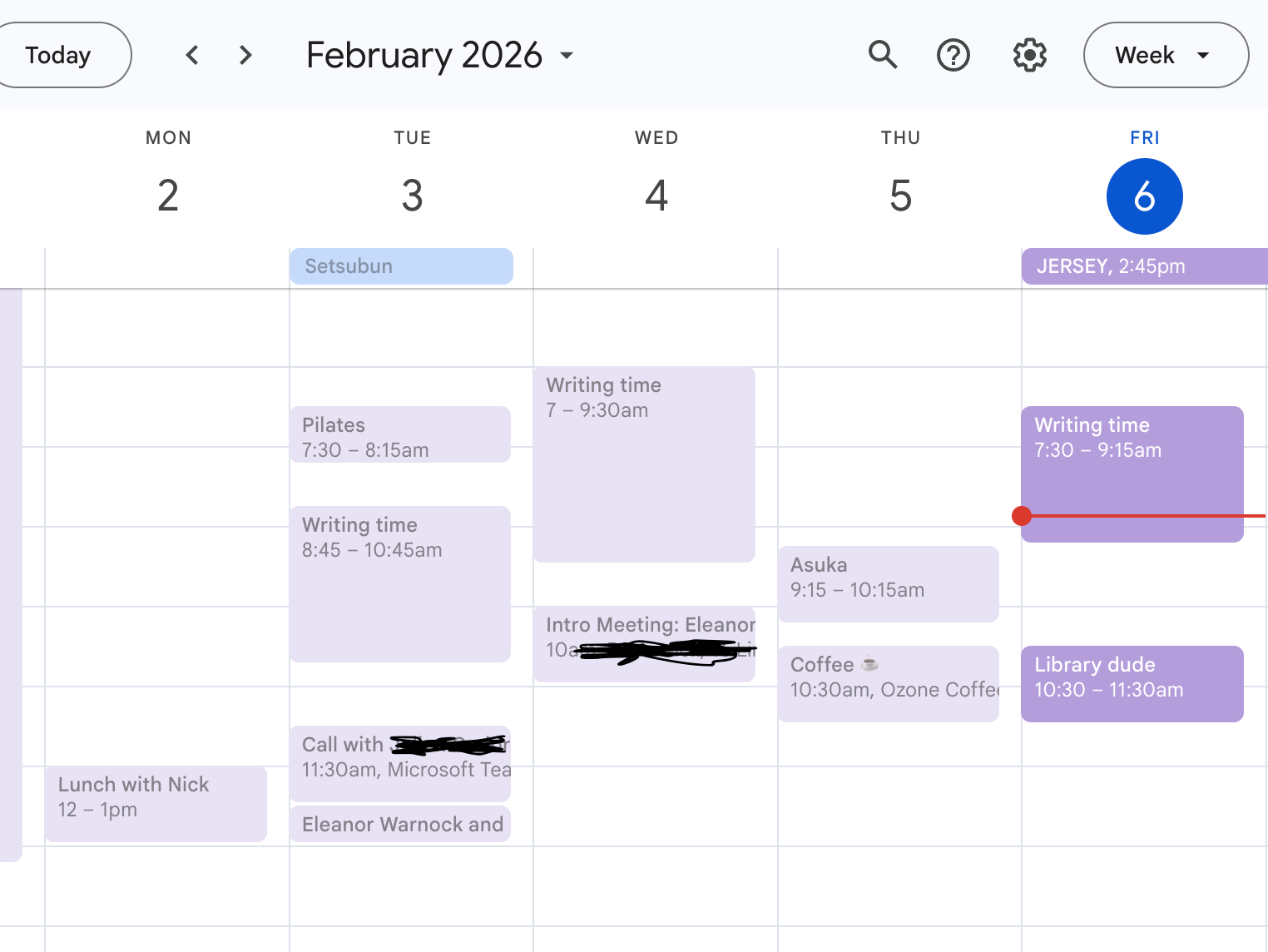
When I was trying to post regularly on LinkedIn, I put a 30 minute hold in my diary three days a week and forced myself to squeeze something out in those times. Currently, I try and reserve at least three, two-hour writing sessions in my diary a week. Putting those in my diary on Sunday evening is one of my personal KPIs.
Thinking and writing are a muscle. You need to stretch it before working out!
Final thoughts on writing and disruption
Can someone please tell the people unloading software shares this week because Anthropic released some plugins to just chill? The core of my job—extracting ideas from brilliant people and turning them into compelling narratives—remains stubbornly un-AI-ifiable. Most knowledge work involving original thought hasn’t been disrupted yet.
AI works brilliantly for templatable tasks like routine emails or LinkedIn posts where “good enough” has clear parameters. Codifying how a specific person thinks and sounds, or my editorial taste, on the other hand, is still near impossible.
Tech companies keep missing the mark. They’re trying to “solve” the blank page problem I just spent several paragraphs celebrating. A great AI-powered writing product would give room to roam, not rails. It would understand that the discomfort of starting is part of the creative process.
To truly disrupt writing, a tool also needs seamless integrations. In the past few weeks, I’ve developed newfound respect for Grammarly, which has spent years nailing hundreds of micro-decisions with near-perfect precision and manages to seamlessly integrate into any page on your browser. When I use Claude to write and edit, I still have to open a new window next to Google Docs.
The tools are coming. Coding has been disrupted. But I hope AI labs don’t just chase the easy wins—building for developers because the workflows are clearer and the revenue is obvious. Writing tools that actually work will require understanding writers’ actual needs and workflows, not just applying the coding playbook. I think we can confidently say writing has been disrupted when something dethrones Google Docs. I’ve seen promising experiments (you know who you are!), but we’re nowhere close.

How much of your job has been disrupted by AI? What parts of your job do you think can be automated? Which require judgment? Message me on LinkedIn or reply to this email.
Your newsletters are my little nook in the internet where things are calm and not "HeRE's a nEw AI TooL ThAt's gOnna ChaNgE eEVeRYHING"
Everything here resonates so strongly, and I'm very excited for this future!