


In this newsletter, I've talked about how companies can stand out with great content, a distinctive voice…or simply by sounding human. (The bar is on the floor, isn't it?) The missing piece is how your brand feels in the real world. What emotion do your events or your community evoke? On this question, Verna Vuoripuro is holding the bar high.
A former journalist, Verna now leads communications, community, and growth at Illusian, the founder office behind Supercell, Wolt, Zalando, and others. As a trusted advisor to some of Europe's most prominent founders, she's learned how to design thoughtful experiences that make people feel seen, not sold to.
We talked about what her journalism background taught her about audiences, why she still writes a column, and why her benchmark for Illusian’s brand isn't another investment firm — it's a legendary Swedish luxury hotel.

Audience-first, always. Wrong question: “What do I want to say?” Right question: “Does this bring value to my audience?”
Ruthless curation wins. Verna’s job is to create a magic mix where everyone in the room feels like they needed to be there. It doesn't matter how fancy the room is; it matters who's in it, she says.
Benchmark against hospitality, not industry. Stop measuring your events and community experiences against other companies. Verna’s north star is Stockholm’s Ett Hem hotel. A cup of tea at the right time is better than a branded mug any day.
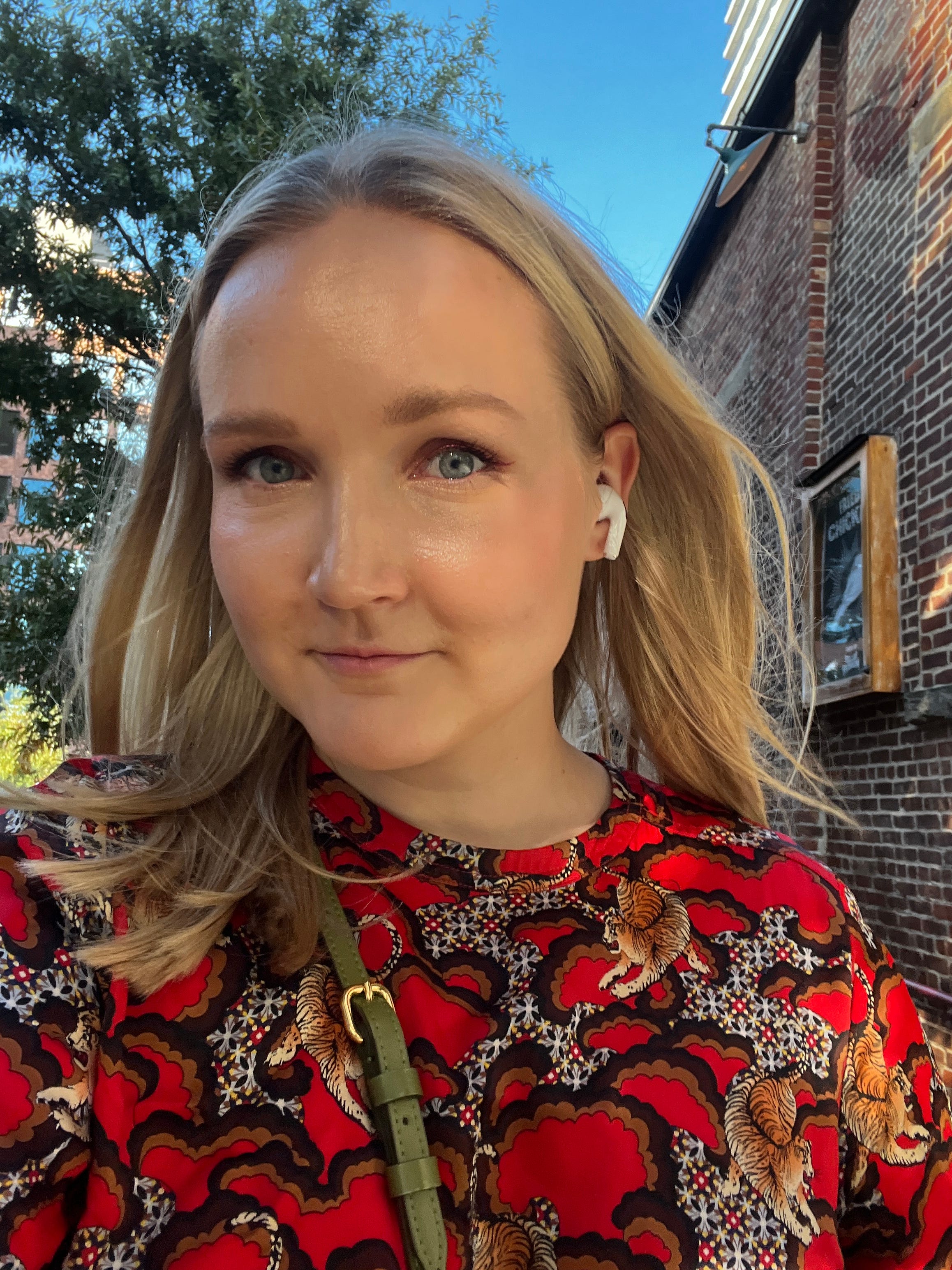

Talk me through your career. You made the jump from journalism to comms — why did you decide to do that? How have you thought about your career?
I began as a music critic at 15 when music magazines were still a thing. It turns out you can only have such strong opinions as a teenager — I could never do that job now. I covered local news during high school and ended up at Helsingin Sanomat at 19. I started working as a news editor there at 21 and stayed for six years. Those were my formative years, and I still miss the adrenaline.
A lot of people who became journalists were drawn to the industry since they were young. What made you leave the industry?
I’m a realist, and I knew that, sadly, journalism might not be a long-term career. So I did my master’s in business while I was still at the newspaper. My thesis was about how ISIS, the terrorist organization, builds brand and community through narrative.
With the degree, I wanted to see more of the world, and that’s how I ended up at [technology consultancy] Reaktor. I led their global comms for a few years, and then I moved on to Illusian.
What did you bring from journalism into these roles?
The most important thing I took from my journalism background is audience-centricity. Whether it’s a piece of content, a community activation, a product, or a service, the question for me is always: does this bring value to my audience? Work with the audience first, and the rest will follow.
“Work with the audience first, and the rest will follow.”
I think a lot of executives think of their own motives first: “What do I want to get out to the world? What’s the cool feature of my product I want to showcase?” They should flip it around and think, “What does the audience get out of this?” That will eventually help you spread the word about your product, but it has to come from the audience value first.
What about your role at Illusian? Supporting successful tech entrepreneurs is a whole other audience.
Illusian is the investment company of 20 European unicorn and decacorn founders and operators across six countries. We do joint venture investments and philanthropic projects. We’ve invested €600 million into venture over our lifespan, both direct and fund investments. Our direct investments include Linear, Nexos, n8n, and Gradium. We also provide our founders wealth management and financial admin, like a traditional family office.
I joined four years ago as the first hire in this role, to lead comms and community. If I had to sum it up, I’d say I’m responsible for how Illusian shows up to all our different audiences and stakeholders — whether it’s a nonprofit, a portfolio company, or a wealth-management client — making sure it’s all aligned with our brand and that the experience matches who we are.
Can you give a concrete example of what that work looks like?
For example, designing the service model of what we do — what these first-generation tech entrepreneurs need, figuring out the offering, how we bring these founders in to support our portfolio companies. We have to design that system so we don’t waste anyone’s time, but so that the founders and portfolio companies get real value from us, instead of us doing stuff for the sake of doing something.
A part I love that’s not public at all is doing reputation management for the founders. Their companies look after them as CEO or founder, but they also have their private persona. Figuring out how to protect that is exciting to me because of my journalism background.
When people reach a certain level of success, there’s both the narrative of them as the person attached to the company, and their personal one — their legacy, what they stand for. You see far more people in the US thinking thoughtfully about how to craft that personal narrative than in Europe.
I think Europe is going to see more and more founders doing their second, third, or even fourth big business, and that’s when they start to think about who they are versus their company, because a founder’s personality is often very tied to the company’s brand. Startups are personal in that way, so once you start thinking about your next venture, you suddenly wake up to: “Who am I, actually?”
What do you think founders or leaders get wrong about storytelling?
I’ve had countless times in my career when leaders have come to me and said, “I want to become a thought leader.” I ask, “What do you want to talk about?” and they say something like, “Digitalization in healthcare.” That’s a very general theme, not a topic, let alone a point of view.
A lot of people want to become a thought leader without a single thought. You cannot write or speak well if you haven’t thought about something well — and most people skip that part. But it’s unique ideas and critical takes, solid, rational expertise, that make the message stick.
In my opinion, and I’m happy to say this on the record, there are some people who don’t have many original thoughts. Then there are people who are genuinely visionary. But I think you also need to give leaders space to bring those thoughts out. How do you help leaders do that? Find the time and the courage?
It takes a lot of time to get people comfortable and relaxed. Then suddenly, even the people you thought didn’t have many original thoughts turn out to have the hardest takes. When you make them feel interesting, they relax and start talking more. Usually it’s in settings where you’re not trying to create a narrative — you start with a simple question like, “What pissed you off today?”
A lot of leaders are afraid to speak their mind, which is understandable. That’s where audience-centricity comes in — if you know your audience, if you know the specific group of people or companies you want to appeal to, you don’t have to think about a message that appeals to everyone — because a message for everyone ends up appealing to no one.
Your role also includes a lot of the community side. What have you learned through that?
Community is all about ruthless curation. It doesn’t matter how fancy the room is; it matters who’s in it. Not in the sense of who’s most prestigious or gathering the most like-minded tech bros in a room, but making sure you have a great mix of people so that everyone you meet in a community you think, “Oh, I really needed to talk to you,” even if you didn’t realize it beforehand.
“Community is all about ruthless curation. It doesn’t matter how fancy the room is; it matters who’s in it.”
Then, of course, you have to execute it well. I’m a big believer in craft and attention to detail, but none of it matters if the right people aren’t there. At Illusian, I’m very proud of how we bring together people from so many corners of the ecosystem. Not just founders, NGO leaders, academics, politicians — people who usually don’t have a reason to interact. That’s where the biggest results come from. It takes so much planning, but it has to look like none of it is planned.
You mentioned craft — tell me about your philosophy of craft.
I’m a huge fan of Will Guidara, the author of Unreasonable Hospitality, who used to run the restaurant Eleven Madison Park. Unreasonable hospitality is how I approach everything we do. Most people won’t notice the tiniest details, but the ones who do really appreciate it.

I have a huge passion for hosting and luxury experiences, and I think we can learn a lot from that even in the tech world. For instance, for Illusian’s community, I haven’t used another VC fund as a benchmark; I’ve used a hotel in Stockholm called Ett Hem.
I am a hotel junkie, and I love Ett Hem. I stayed there alone just to experience it.
Ett Hem is such a great benchmark for companies. It’s not about extravagance or being the flashiest source of luxury; it’s about thinking about the human being. When you walk in, do you want a cup of tea? How do we make sure you can be yourself, be vulnerable, let your guard down? And then everything just works. It feels casual, but there’s a huge operation going on behind the scenes that you don’t notice. That’s the magic.
If you extrapolate this to a founder offsite, for example, think about what the founder actually wants when they walk into their room at an offsite. It’s not swag and brochures. It’s mosquito repellent and sunscreen.
We’ve talked a lot about making people feel human and helping them let their guard down. In the age of AI, do you think people are hungrier for those experiences? Does AI make it harder to provide them?
I think no matter what era, people want to feel seen and heard. If you can somehow engineer that into a community, you can win.
“People want to feel seen and heard. If you can somehow engineer that into a community, you can win.”
Storytelling and narrative are things we need more of in the age of AI, because people use it for sense-making, and now more than ever, we need to make sense of what’s going on. So I think a lot more businesses and communities will be built narrative-first. You’ve seen all the news about comms people being some of the most important hires at a startup, and I think it’s true. Look at the vibe-coding companies, for instance. Lovable is winning because it built narrative and brand first. Of course, the product is great too, but they couldn’t have done it on the product alone.
Switching gears, I want to ask you about your column in Helsingin Sanomat. A lot of people aren’t brave enough to write publicly while they have a high-profile job such as yours, and I love that you keep doing it. How did that come about?
I think I had a story idea and messaged one of the editorial people and asked if they wanted to publish it. Somehow I ended up writing one, then another, and now it’s been going on for a year. It keeps my writing and thinking sharp — having strong opinions. I think it benefits Illusian too.
At least in Finland, a lot of journalists have only ever been journalists. If you really want to understand how the business world works, how tech works, you have to be in it. My column is a kind of briefing from that weird world that’s everyday for us but definitely isn’t for a lot of people.
Even though I’ve worked in tech a couple of times now — I’ve probably spent about as much time in journalism as in tech — I still feel like an observer in the world of tech. I call myself the bullshit sniffer. I go in and ask, “That doesn’t make sense to me. Can you explain it to me?”
It’s tricky because this is also such an inward-looking community. It can feel really weird to be that kind of observer. I’ve sometimes tried to become more of an insider, to lose that journalistic part of me a little — but I think, and I hope, that I’ve learned it’s actually a strength.

One country that excels in curating outstanding physical experiences is Japan, where I’m currently visiting on a literary side quest. A few of my favorites for attention to detail and care:
I left Tokyo in 2018, and the bartenders at my neighborhood cocktail bar still remember that I prefer room-temperature water over iced. For a similarly A+ cocktail experience, try These.
Shibuya café Chatei Hato has a collection of dozens of unique ceramic cups. You never know which one your coffee will arrive in.
Developers go to great lengths to make sure existing shrines are respected when new buildings go up. Often that means moving the shrine to the roof, but this shrine was cleverly fitted into the ground floor of this high-rise. I love that someone painted some clouds so that the gods can feel the sky.

See you next week!

“What pissed off you today?” Great question to uncover unique thoughts. And, as you’ve written previously, asking the right questions is key to uncovering unique opinions 🤘